A Step-by-Step Guide to Take Control of Your Money
Managing money is one of the most important life skills anyone can develop. Yet many people struggle with budgeting because they believe it is complicated or restrictive.
The truth is simple: a good budget gives you freedom, not limitations.
When you understand how to plan your money properly, you stop worrying about bills, avoid unnecessary debt, and start building financial security.
This guide will walk you through budgeting strategies that actually work, even if you have never budgeted before.
By the end of this article, you will learn:
- How budgeting really works
- Step-by-step budgeting methods
- Proven budgeting strategies used by financially successful people
- Practical examples and charts
- Mistakes to avoid
- Frequently asked questions
Let’s start from the basics.
Table of Contents
- What Is Budgeting?
- Why Budgeting Is Important
- The Psychology Behind Successful Budgeting
- Step-by-Step Budgeting Strategy That Works
- The Most Effective Budgeting Methods
- Budgeting Chart Example
- Practical Budgeting Example (Real Life Scenario)
- Budgeting Tools That Make Life Easier
- Common Budgeting Mistakes to Avoid
- Tips to Make Your Budget Work Long-Term
- Frequently Asked Questions (FAQ)
- Final Thoughts
What Is Budgeting?
Budgeting is the process of planning how you will spend and save your money over a specific period of time.
A budget helps you:
- Track income
- Control spending
- Save money
- Avoid debt
- Achieve financial goals
Simply put:
Budget = Income – Expenses – Savings
Without a budget, money disappears quickly because spending happens without control.
Why Budgeting Is Important
Many people think budgeting is only for people with financial problems.
That is not true.
Budgeting is used by:
- Successful entrepreneurs
- Investors
- Businesses
- Governments
- Wealthy individuals
Benefits of Budgeting
- Helps you avoid overspending
- Helps you save money consistently
- Reduces financial stress
- Helps you achieve financial goals faster
- Helps you prepare for emergencies
People who budget usually have stronger financial stability than those who do not.
The Psychology Behind Successful Budgeting
Budgeting works best when you understand your spending behavior.
Most spending decisions are emotional, not logical.
Examples:
- Buying things because of stress
- Shopping to feel better
- Spending to impress others
- Impulse purchases
Successful budgeting requires:
- Awareness
- Discipline
- Clear goals
The Budgeting Mindset
Think of budgeting as:
❌ Restricting yourself
✔️ Directing your money toward what truly matters
Step-by-Step Budgeting Strategy That Works
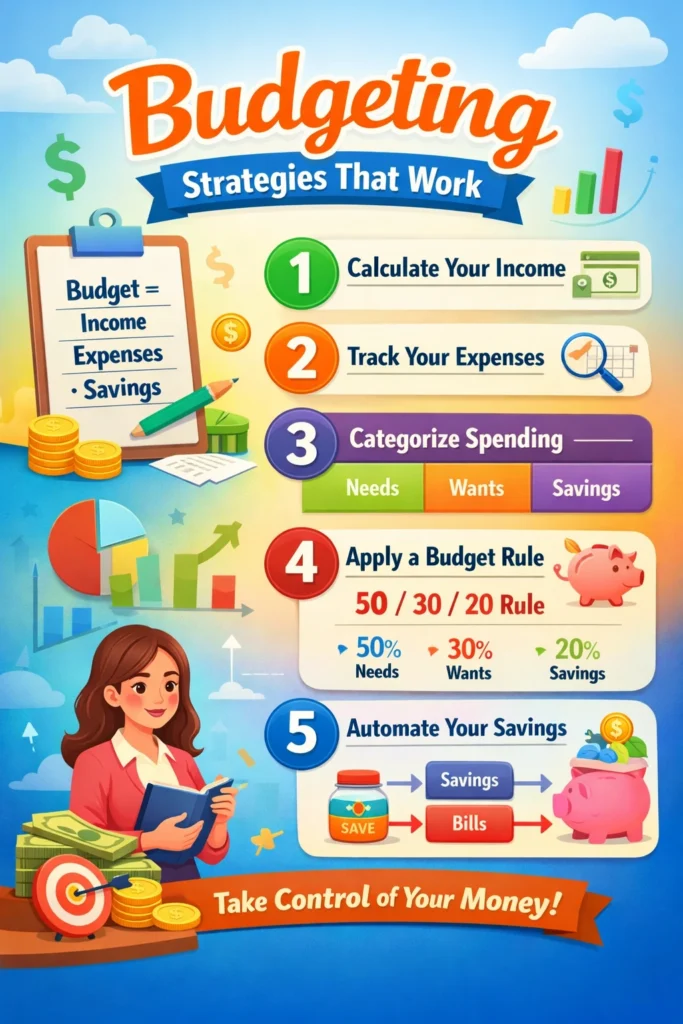
Let’s break budgeting into simple actionable steps.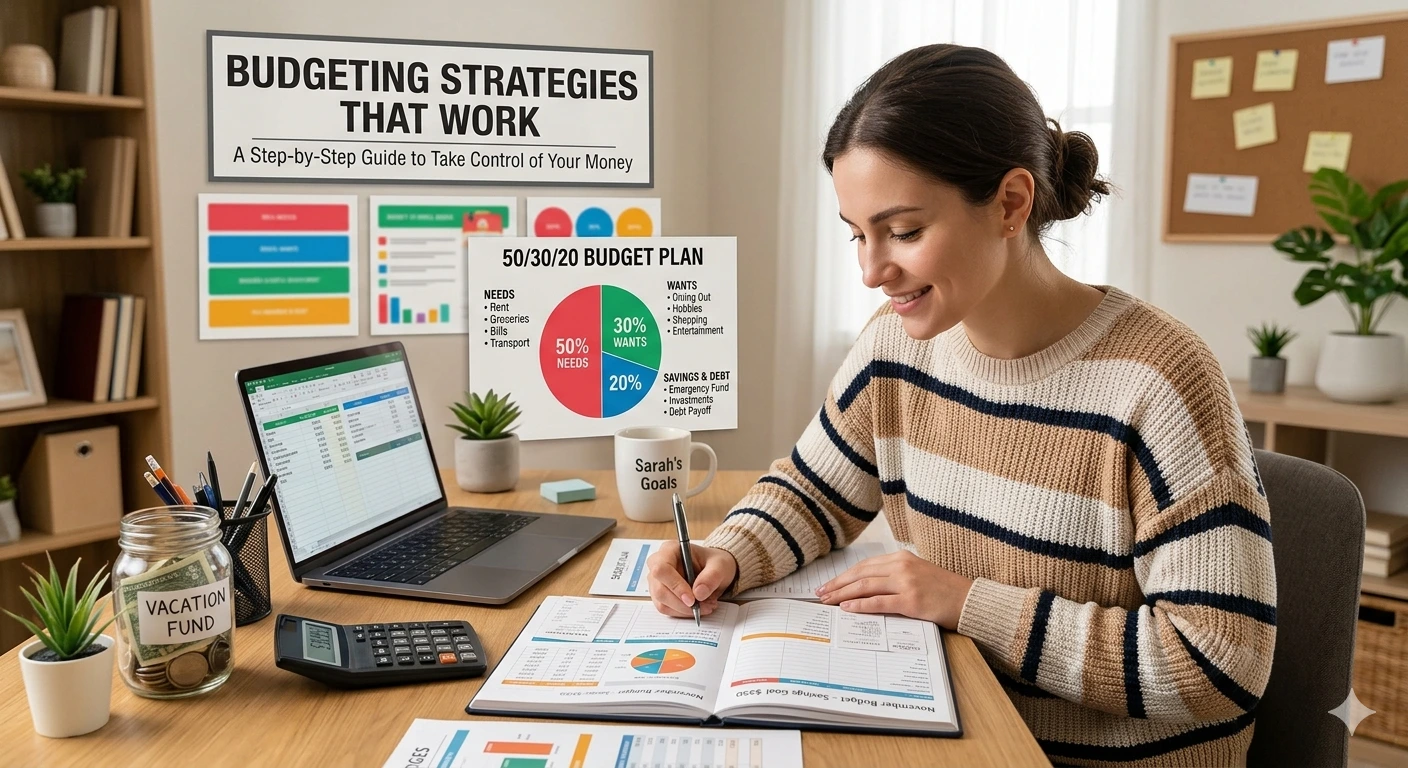
Step 1: Calculate Your Total Income
First, determine how much money you earn each month.
Income may include:
- Salary
- Business income
- Freelance income
- Side hustles
- Passive income
Example:
| Income Source | Amount |
|---|---|
| Salary | $2,500 |
| Freelance | $500 |
| Online income | $300 |
Total Income = $3,300
Step 2: Track All Your Expenses
List everything you spend money on.
Common expense categories:
- Housing
- Food
- Transportation
- Utilities
- Insurance
- Entertainment
- Debt payments
- Savings
Example:
| Expense | Amount |
|---|---|
| Rent | $900 |
| Food | $400 |
| Transport | $150 |
| Internet | $60 |
| Entertainment | $120 |
| Savings | $300 |
Total = $1,930
Tracking expenses helps reveal where your money is actually going.
Step 3: Categorize Your Spending
Divide expenses into three groups:
1. Needs
Essential expenses
Examples:
- Rent
- Food
- Electricity
- Transport
- Healthcare
2. Wants
Lifestyle spending
Examples:
- Netflix
- Eating out
- Shopping
- Entertainment
3. Savings and Investments
Examples:
- Emergency fund
- Retirement
- Investments
Step 4: Apply a Budgeting Framework
Use a budgeting system that fits your lifestyle.
The most popular one is the 50/30/20 Rule.
50/30/20 Budget Rule
| Category | Percentage |
|---|---|
| Needs | 50% |
| Wants | 30% |
| Savings | 20% |
Example if income = $3,000
Needs → $1,500
Wants → $900
Savings → $600
This method is simple and effective for beginners.
Step 5: Automate Your Savings
Automation makes budgeting easier.
Set automatic transfers to savings accounts.
Example:
Income received →
Automatic transfer → Savings → Bills → Spending
This ensures savings happen before spending.
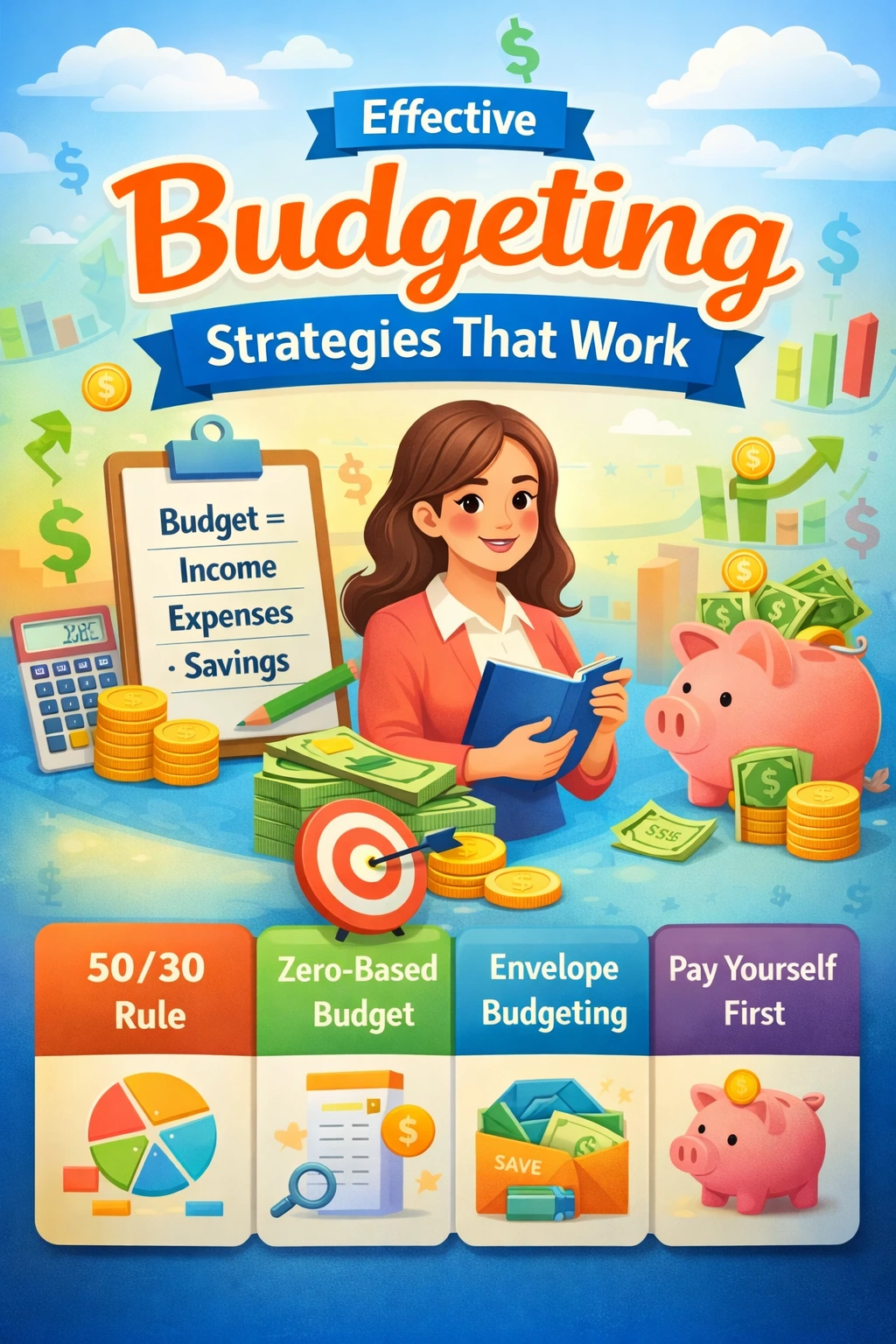
The Most Effective Budgeting Methods
Different budgeting strategies work for different people.
Here are the most popular ones.
1. Zero-Based Budget
In this method, every dollar has a job.
Income – Expenses = 0
Example:
Income = $3,000
| Category | Amount |
|---|---|
| Rent | $900 |
| Food | $400 |
| Transport | $200 |
| Savings | $600 |
| Utilities | $200 |
| Entertainment | $200 |
| Miscellaneous | $500 |
Remaining = $0
Every dollar is assigned a purpose.
2. Envelope Budgeting Method
This is a traditional but effective method.
You divide cash into envelopes for different spending categories.
Example:
Envelope categories:
- Food
- Transport
- Entertainment
- Shopping
Once an envelope is empty, spending stops.
This method helps control impulse purchases.
3. Pay Yourself First Strategy
This strategy focuses on saving before spending.
Income comes in → Savings first → Remaining for expenses.
Example:
Income = $3,000
Savings first = $600
Remaining spending = $2,400
This method ensures consistent wealth building.
Budgeting Chart Example
Below is a simple monthly budget example.
| Category | Budget | Actual Spending |
|---|---|---|
| Housing | $900 | $900 |
| Food | $400 | $420 |
| Transport | $150 | $130 |
| Entertainment | $150 | $200 |
| Savings | $600 | $600 |
This chart helps track budget vs actual spending.
Practical Budgeting Example (Real Life)
Meet Sarah.
Monthly income = $2,800
Before budgeting:
- Constantly broke
- No savings
- Credit card debt
After budgeting:
| Category | Amount |
|---|---|
| Needs | $1,400 |
| Wants | $700 |
| Savings | $700 |
Within 12 months she:
✔ Saved $8,400
✔ Paid off credit card debt
✔ Built emergency fund
This shows budgeting works when done consistently.
Budgeting Tools That Make Life Easier
You don’t need to do budgeting manually.
Helpful tools include:
Budgeting Apps
- Mint
- YNAB (You Need A Budget)
- PocketGuard
- GoodBudget
Spreadsheet Budgeting
Using Excel or Google Sheets can also work very well.
Many people prefer spreadsheets because they give full control.
Common Budgeting Mistakes to Avoid
Many budgets fail because of simple mistakes.
1. Being Too Strict
If your budget is unrealistic, you will abandon it quickly.
Always include some fun spending.
2. Forgetting Irregular Expenses
Examples:
- Car repairs
- Medical bills
- Holidays
- Gifts
Plan for these ahead of time.
3. Not Tracking Spending
Creating a budget without tracking spending defeats the purpose.
Tracking helps you stay accountable.
4. Not Adjusting the Budget
Life changes.
Your budget should also change when income or expenses change.
Tips to Make Your Budget Work Long-Term
Follow these strategies to maintain a successful budget.
Start Simple
Do not overcomplicate your budget.
Begin with just a few categories.
Review Your Budget Monthly
Check what worked and what did not.
Make adjustments where necessary.
Use Visual Tracking
Charts and graphs can help visualize progress.
Seeing progress encourages discipline.
Reward Yourself
Budgeting should not feel like punishment.
Celebrate milestones when you achieve financial goals.
Effects of Good Budgeting
When budgeting becomes a habit, you will notice significant financial improvements.
Positive Effects
✔ Reduced financial stress
✔ Increased savings
✔ Better spending decisions
✔ Less debt
✔ Strong financial confidence
Over time, budgeting creates long-term financial stability.
Frequently Asked Questions (FAQ)
1. What is the best budgeting method for beginners?
The 50/30/20 rule is the easiest budgeting method for beginners because it is simple and flexible.
2. How often should I review my budget?
It is recommended to review your budget every month to track progress and adjust spending.
3. Can budgeting work with a low income?
Yes. Budgeting is even more important with a low income because it helps prioritize essential expenses and savings.
4. Should I still budget if I earn a lot of money?
Absolutely. Many wealthy people maintain strict budgets to grow and protect their wealth.
5. What if my expenses exceed my income?
You must either:
- Reduce spending
- Increase income
- Or do both
Budgeting helps identify where adjustments are needed.
Final Thoughts
Budgeting is not about limiting your lifestyle. It is about taking control of your financial future.
When you apply effective budgeting strategies:
- You spend intentionally
- You save consistently
- You build financial security
The key to success is consistency.
Start with a simple budget today, track your spending, and adjust as needed.
Over time, these small financial habits will create major long-term results.