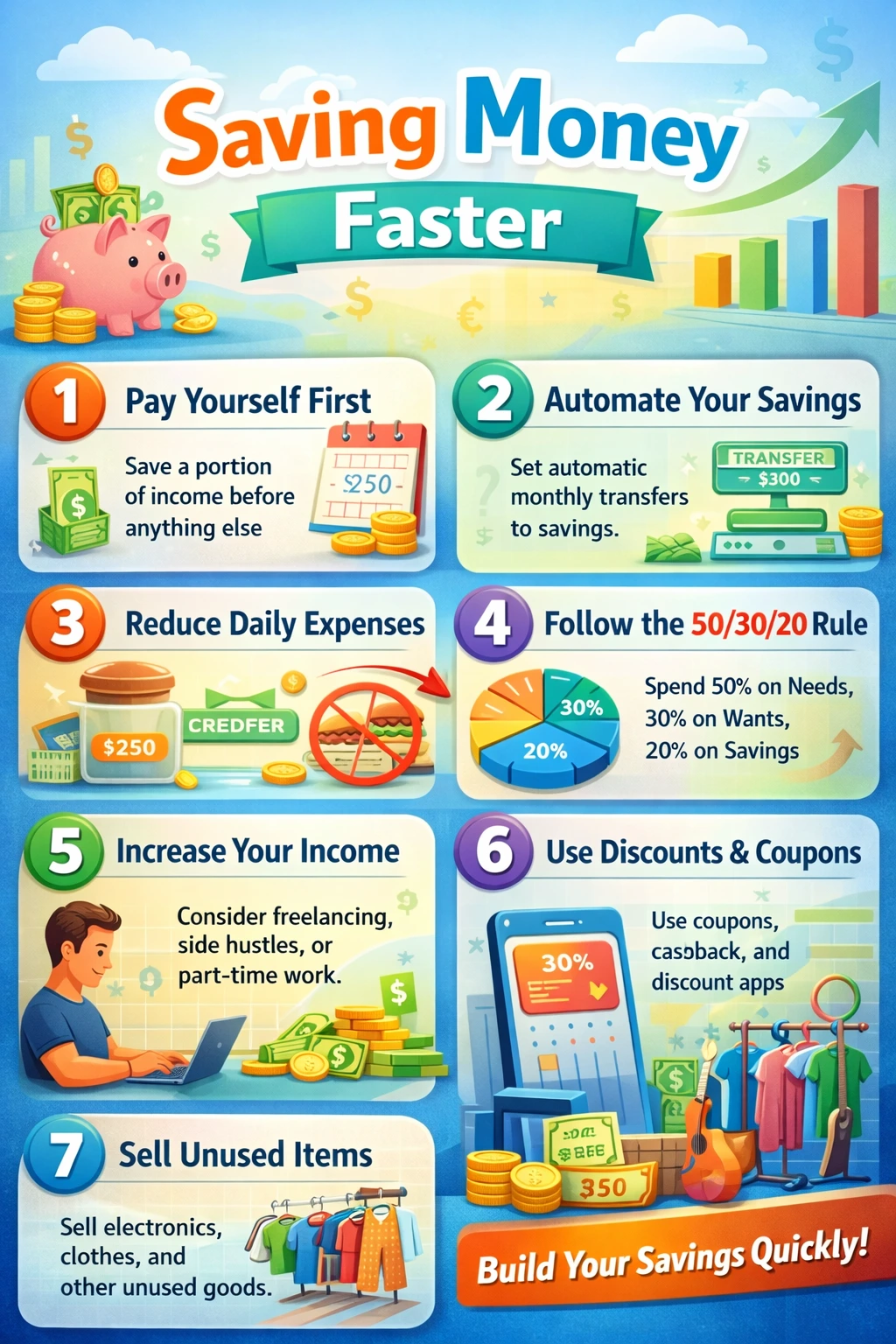
15 Practical Strategies to Build Your Savings Quickly
Saving money is one of the most important financial habits anyone can develop. Yet for many people, saving feels slow, difficult, and sometimes impossible. Bills, daily expenses, and unexpected costs often make it seem like there is nothing left to save at the end of the month.
But here is the truth: saving money faster is not always about earning more—it is about using smarter strategies.
With the right methods, even a small income can produce meaningful savings over time. The key is to understand how money flows through your life and then apply simple techniques that help you keep more of it.
This guide will walk you through powerful and practical strategies that help people save money faster, regardless of their financial situation.
You will learn:
- Step-by-step methods to increase savings quickly
- Simple financial habits used by successful savers
- Practical examples anyone can follow
- Clear charts to visualize savings progress
- Mistakes to avoid when trying to save money
By the end of this guide, you will have a clear action plan to start saving money faster starting today.
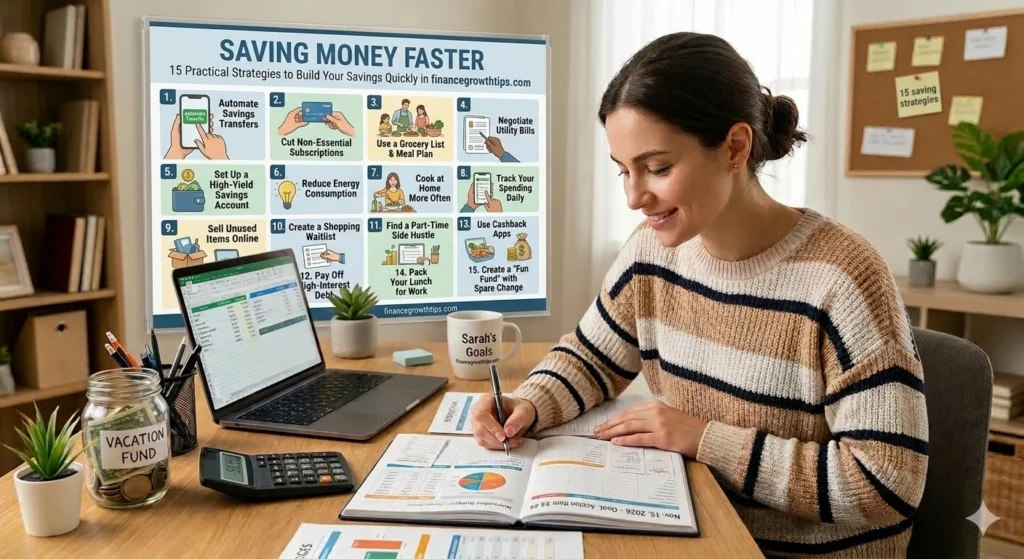
Table of Contents
- Why Saving Money Is Important
- How Saving Money Faster Actually Works
- Step-by-Step Plan to Start Saving Immediately
- 15 Strategies to Save Money Faster
- Simple Savings Chart Example
- Real-Life Examples of Fast Saving
- The Positive Effects of Saving Money
- Common Mistakes That Slow Down Savings
- Tips to Maintain Consistent Saving Habits
- Frequently Asked Questions
Why Saving Money Is Important
Saving money is the foundation of financial stability. Without savings, even a small emergency can create financial stress.
People who consistently save money are better prepared for:
- Unexpected expenses
- Medical emergencies
- Job loss
- Business opportunities
- Investments
Savings also provide something very valuable: financial peace of mind.
Instead of worrying about money every month, you begin to feel more confident and secure about your future.
How Saving Money Faster Actually Works
Saving money faster usually involves two key actions:
- Increasing the amount of money you save
- Reducing unnecessary spending
When these two actions happen together, savings grow much faster.
For example:
| Monthly Income | Monthly Expenses | Monthly Savings |
|---|---|---|
| $2000 | $1800 | $200 |
But after improving spending habits:
| Monthly Income | Monthly Expenses | Monthly Savings |
|---|---|---|
| $2000 | $1500 | $500 |
By reducing expenses, savings increased from $200 to $500 per month.
Step-by-Step Plan to Start Saving Immediately
Many people delay saving because they think they need a perfect plan. The truth is that saving can begin with simple steps.
Step 1: Calculate Your Monthly Income
List all sources of income such as:
- Salary
- Side hustles
- Freelance work
- Business income
Example:
| Income Source | Amount |
|---|---|
| Salary | $2,400 |
| Side hustle | $300 |
Total Income = $2,700
Step 2: Track Your Monthly Expenses
Write down everything you spend money on.
Common categories include:
- Rent
- Food
- Transportation
- Subscriptions
- Entertainment
Tracking expenses reveals hidden spending habits.
Step 3: Set a Clear Savings Target
Instead of saving randomly, create a clear goal.
Examples:
- Save $1,000 emergency fund
- Save $5,000 for business
- Save $10,000 for investment
A clear goal increases motivation and focus.
15 Powerful Strategies to Save Money Faster
Here are practical strategies used by people who successfully build strong savings.
1. Pay Yourself First
Before paying bills or spending money, transfer a portion of income directly to savings.
Example:
Income received → Savings first → Remaining spending.
2. Automate Your Savings
Automation removes the temptation to spend.
Set automatic transfers from your main account to your savings account each month.
3. Follow the 50/30/20 Rule
A simple budgeting strategy:
| Category | Percentage |
|---|---|
| Needs | 50% |
| Wants | 30% |
| Savings | 20% |
This ensures consistent saving every month.
4. Cut Small Daily Expenses
Small expenses add up quickly.
Examples:
- Daily coffee
- Frequent fast food
- Unused subscriptions
Reducing these costs can produce significant monthly savings.
5. Use the 24-Hour Spending Rule
Before buying something unnecessary, wait 24 hours.
This helps prevent impulse purchases.
6. Create a Separate Savings Account
Keeping savings separate reduces the temptation to spend.
Many people save faster when the money is out of immediate reach.
7. Reduce Lifestyle Inflation
When income increases, many people increase spending.
Instead, keep expenses stable and increase savings.
8. Cook More Meals at Home
Eating out frequently can drain your finances.
Cooking at home can reduce food expenses significantly.
9. Sell Unused Items
Many people have unused items that can be sold.
Examples:
- Old electronics
- Clothing
- Furniture
Selling unused items provides instant extra savings money.
10. Use Cash for Certain Expenses
Using cash can help control spending because you can see money leaving your hands.
11. Set Weekly Spending Limits
Divide your monthly spending into weekly budgets.
This prevents overspending early in the month.
12. Take Advantage of Discounts
Using discounts, coupons, or cashback programs helps reduce expenses.
13. Increase Your Income
Sometimes saving faster requires earning more.
Consider:
- Freelancing
- Online work
- Small businesses
- Side hustles
14. Track Savings Progress
Monitoring your savings progress helps maintain motivation.
Seeing growth encourages consistent habits.
15. Challenge Yourself with Savings Goals
Example challenges:
- No-spend weekend
- Save $10 daily challenge
- 30-day savings challenge
These challenges build strong financial discipline.
Simple Savings Chart Example
Below is an example of how consistent savings grow over time.
| Monthly Savings | 6 Months | 1 Year |
|---|---|---|
| $200 | $1200 | $2400 |
| $400 | $2400 | $4800 |
| $600 | $3600 | $7200 |
Even small savings grow significantly over time.
Real-Life Example of Fast Saving
Meet Daniel.
Monthly income = $2500
Before improving his habits:
Monthly savings = $100
After applying simple strategies:
| Strategy Applied | Result |
|---|---|
| Reduced eating out | Saved $150 |
| Canceled subscriptions | Saved $60 |
| Side freelance work | Earned $300 |
New monthly savings = $610
In one year he saved $7,320.
Positive Effects of Saving Money Faster
Consistent saving produces powerful long-term benefits.
Financial Effects
- Reduced debt
- Greater financial security
- Increased investment opportunities
Personal Effects
- Lower financial stress
- Better decision making
- Greater confidence
Saving money builds long-term financial freedom.
Common Mistakes That Slow Down Savings
Avoid these common mistakes.
1. Saving Only What Is Left
Always save first instead of waiting for leftover money.
2. Setting Unrealistic Goals
Saving too aggressively can lead to frustration.
Start small and increase gradually.
3. Ignoring Small Expenses
Small purchases can accumulate into significant spending.
4. Lack of Budgeting
Without a plan, savings usually fail.
Budgeting provides structure and discipline.
Tips to Maintain Strong Saving Habits
Building savings requires consistency.
Helpful habits include:
- Reviewing finances monthly
- Adjusting spending when necessary
- Tracking savings goals
- Celebrating financial progress
Saving becomes easier once it turns into a routine.
Frequently Asked Questions
1. How can I start saving money with a low income?
Start by reducing unnecessary expenses and saving small amounts consistently.
2. What percentage of income should I save?
A common recommendation is saving at least 20% of income when possible.
3. Should I save before paying bills?
Essential bills should be paid, but it is important to prioritize saving early in the budgeting process.
4. Is saving money better than investing?
Saving is the first step. After building savings, investing helps grow wealth.
5. How much emergency savings should I have?
Financial experts recommend saving 3 to 6 months of expenses.
6. How can I avoid spending my savings?
Use a separate savings account and avoid linking it to daily spending.
7. Can saving money improve financial stress?
Yes. Savings provide security and reduce financial pressure.
8. What is the fastest way to grow savings?
Combining expense reduction with increased income produces the fastest results.
9. Should I track my savings progress?
Yes. Tracking progress helps maintain motivation and discipline.
10. Is it too late to start saving money?
No. It is never too late to start building savings.
Final Thoughts
Saving money faster is possible when you combine discipline, smart spending habits, and clear financial goals.
Even small changes can produce meaningful financial results over time.
The most important step is to start today.
With consistent effort and the strategies outlined in this guide, anyone can build stronger savings and move toward long-term financial stability.