
A Step-by-Step Guide to Building Wealth from Scratch
Investing is often seen as something only experts or wealthy individuals can do. Many beginners assume the stock market is too complex, too risky, or requires a lot of money to start. The truth is very different.
Today, investing is more accessible than ever. With the right knowledge and a clear strategy, anyone can start building wealth—even with a small amount of money.
Investing simply means putting your money into assets that can grow over time. Instead of letting your money sit idle in a savings account, investing allows it to work for you.
For beginners, learning the basics is the most important step. Understanding how investments work, how risks are managed, and how wealth grows gradually can make a huge difference in financial success.
This comprehensive beginner’s guide will walk you through everything you need to know about investing—from the fundamentals to practical strategies you can apply immediately.
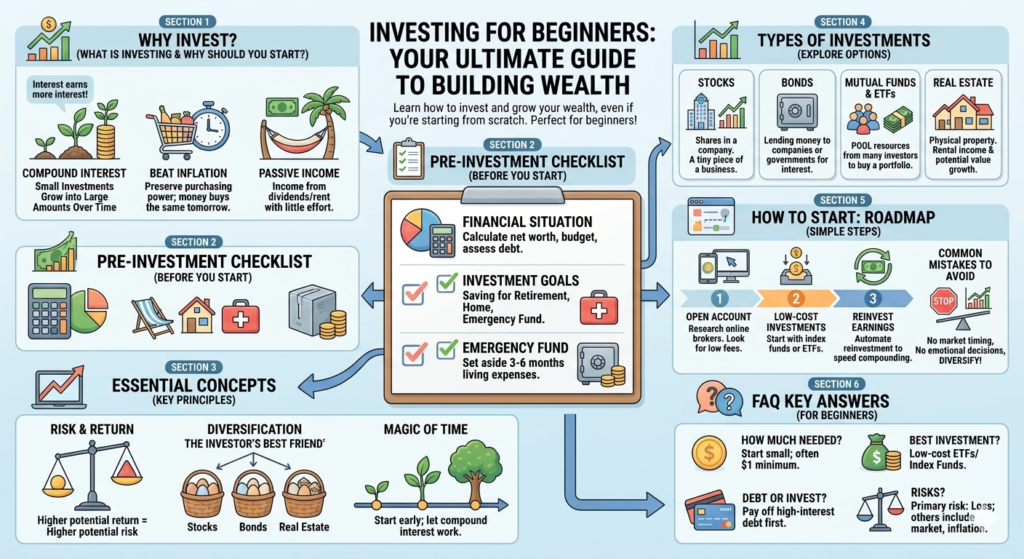
Table of Contents
- What is Investing?
- Why Investing is Important
- The Power of Compound Growth
- Types of Investments Beginners Should Know
- Step-by-Step Guide to Start Investing
- Understanding Risk and Return
- Common Beginner Investment Strategies
- Mistakes New Investors Must Avoid
- Real-Life Investment Examples
- Frequently Asked Questions (FAQ)
- Final Summary
What is Investing?
Investing is the process of allocating money into assets with the expectation that they will grow in value over time.
Instead of spending all your income immediately, investing allows you to build financial security for the future.
Simple Example
Imagine two people:
| Person | Monthly Saving | After 10 Years (No Investing) |
|---|---|---|
| John | $200 | $24,000 |
| Mary | $200 invested | $40,000+ (depending on returns) |
Mary’s money grows because it is invested.
Key Goal of Investing
- Grow wealth
- Beat inflation
- Create passive income
- Achieve financial independence
Why Investing is Important
Many people rely only on their salary. Unfortunately, salary alone rarely leads to long-term wealth.
Investing helps you build multiple income sources.
Benefits of Investing
| Benefit | Explanation |
|---|---|
| Wealth Growth | Investments grow faster than savings |
| Passive Income | Dividends and rental income |
| Retirement Security | Financial independence later in life |
| Inflation Protection | Investments grow faster than inflation |
Without investing, money slowly loses value due to rising prices.
The Power of Compound Growth
Compound growth is the secret behind long-term investing success.
It means your money earns returns, and those returns also start earning returns.
Illustration
| Year | Investment | Return (8%) | Total |
|---|---|---|---|
| 1 | $1,000 | $80 | $1,080 |
| 2 | $1,080 | $86 | $1,166 |
| 5 | — | — | $1,469 |
| 10 | — | — | $2,159 |
The longer you invest, the faster your money grows.
Key Lesson
Start early.
Time in the market is more powerful than trying to time the market.
Types of Investments Beginners Should Know
Before investing, it is important to understand the different asset types.
1. Stocks
Stocks represent ownership in a company.
When the company grows, the value of your shares increases.
Benefits:
- High long-term returns
- Dividend income
- Ownership in companies
Risk level: Medium to High
2. Bonds
Bonds are loans you give to governments or companies.
They pay fixed interest over time.
Benefits:
- Lower risk
- Stable income
- Portfolio stability
Risk level: Low to Medium
3. Mutual Funds
Mutual funds pool money from many investors and invest in multiple assets.
Benefits:
- Diversification
- Professional management
- Beginner-friendly
4. Exchange Traded Funds (ETFs)
ETFs track a group of stocks or indexes.
They combine diversification with low cost.
Example:
An ETF may track the top 500 companies in the market.
5. Real Estate
Real estate investing involves buying property to generate income or appreciation.
Examples:
- Rental houses
- Apartments
- Land investment
Benefits:
- Rental income
- Property value growth
- Inflation protection
Step-by-Step Guide to Start Investing
Beginners often feel overwhelmed. Following a simple process makes investing easier.
Step 1: Set Clear Financial Goals
Examples:
- Retirement
- Buying a house
- Financial freedom
- Education funds
Goals determine investment strategy.
Step 2: Build an Emergency Fund
Before investing, save at least 3–6 months of living expenses.
This prevents selling investments during emergencies.
Step 3: Eliminate High-Interest Debt
Credit card debt can cost more than investment returns.
Pay off expensive debt before investing heavily.
Step 4: Start with Small Investments
You do not need thousands of dollars.
Many platforms allow investing with small amounts.
Example:
| Monthly Investment | After 20 Years (8% Return) |
|---|---|
| $50 | $29,000 |
| $100 | $59,000 |
| $200 | $118,000 |
Small consistent investments matter more than large occasional ones.
Step 5: Diversify Your Portfolio
Diversification means spreading money across multiple investments.
Example portfolio:
| Asset | Allocation |
|---|---|
| Stocks | 50% |
| ETFs | 25% |
| Bonds | 15% |
| Real Estate | 10% |
Diversification reduces risk.
Step 6: Invest Consistently
The best strategy is regular investing.
This method is called Dollar-Cost Averaging.
Example:
Investing $100 monthly regardless of market conditions.
Benefits:
- Reduces emotional decisions
- Smooths market fluctuations
Understanding Risk and Return
All investments carry risk.
Higher returns usually come with higher risk.
Risk vs Return Illustration
| Investment | Risk | Potential Return |
|---|---|---|
| Savings account | Very Low | Low |
| Bonds | Low | Moderate |
| ETFs | Moderate | Good |
| Stocks | High | High |
| Cryptocurrency | Very High | Extremely High |
Beginners should focus on balanced investments.
Common Beginner Investment Strategies
1. Buy and Hold Strategy
Buy quality investments and hold them long term.
Benefits:
- Lower fees
- Less stress
- Long-term growth
2. Index Investing
Index funds track major market indexes.
Benefits:
- Diversified
- Low cost
- Reliable long-term returns
3. Dividend Investing
Invest in companies that regularly pay dividends.
Benefits:
- Passive income
- Long-term wealth
- Reinvested dividends increase growth
4. Automated Investing
Many platforms allow automatic monthly investments.
Benefits:
- Consistency
- Discipline
- Reduced emotional decisions
Common Beginner Mistakes to Avoid
1. Trying to Get Rich Quickly
Investing is a long-term process.
Avoid schemes promising fast profits.
2. Lack of Diversification
Putting all money into one stock is dangerous.
Spread investments across different assets.
3. Emotional Investing
Fear and greed cause poor decisions.
Stick to your strategy.
4. Ignoring Fees
High fees reduce long-term profits.
Always check expense ratios and brokerage fees.
5. Not Investing Early
Waiting too long reduces compound growth benefits.
Even small investments today matter.
Real-Life Investment Examples
Example 1: Consistent Investor
James invests $150 monthly for 25 years.
| Year | Total Invested | Value (8% Return) |
|---|---|---|
| 5 | $9,000 | $10,800 |
| 10 | $18,000 | $27,000 |
| 25 | $45,000 | $118,000 |
Consistency creates wealth.
Example 2: Early Starter
Anna starts investing at age 22.
Mike starts at 35.
| Investor | Monthly Investment | Total at 60 |
|---|---|---|
| Anna | $200 | $680,000 |
| Mike | $200 | $250,000 |
Starting early makes a huge difference.
Frequently Asked Questions (FAQ)
1. What is the minimum amount needed to start investing?
You can start investing with as little as $10–$50 depending on the investment platform.
2. Is investing risky?
Yes, all investments carry risk. However, diversification and long-term strategies reduce risk significantly.
3. What is the best investment for beginners?
Index funds and ETFs are often recommended because they are diversified and easy to manage.
4. How long should I hold investments?
Long-term investing (5–20 years) usually produces better results than short-term trading.
5. Can I lose money in investing?
Yes, markets fluctuate. However, long-term diversified investors historically recover and grow wealth.
6. Should I invest before paying debt?
High-interest debt should usually be paid off before investing.
7. How often should I check my investments?
Checking quarterly or semi-annually is usually sufficient.
8. What is diversification?
Diversification means spreading money across different investments to reduce risk.
9. Do I need financial knowledge to invest?
Basic knowledge helps, but beginner-friendly funds make investing accessible to everyone.
10. What is the safest investment?
Government bonds and diversified index funds are generally considered safer investments.
Key Takeaways (Quick Summary Chart)
| Principle | Meaning |
|---|---|
| Start Early | Time multiplies investment growth |
| Invest Consistently | Monthly investing builds discipline |
| Diversify | Spread risk across assets |
| Think Long Term | Wealth grows slowly but steadily |
| Avoid Emotional Decisions | Stick to your strategy |
Final Summary
Investing is one of the most powerful tools for building financial security and long-term wealth. While it may seem complicated at first, the fundamentals are simple: start early, invest consistently, diversify your portfolio, and stay focused on long-term goals.
Beginners do not need large amounts of money or expert knowledge to start investing. Small, regular contributions combined with patience and discipline can lead to significant financial growth over time.
The most important step is simply getting started. By learning the basics and applying smart strategies, anyone can build a strong financial future through investing.