
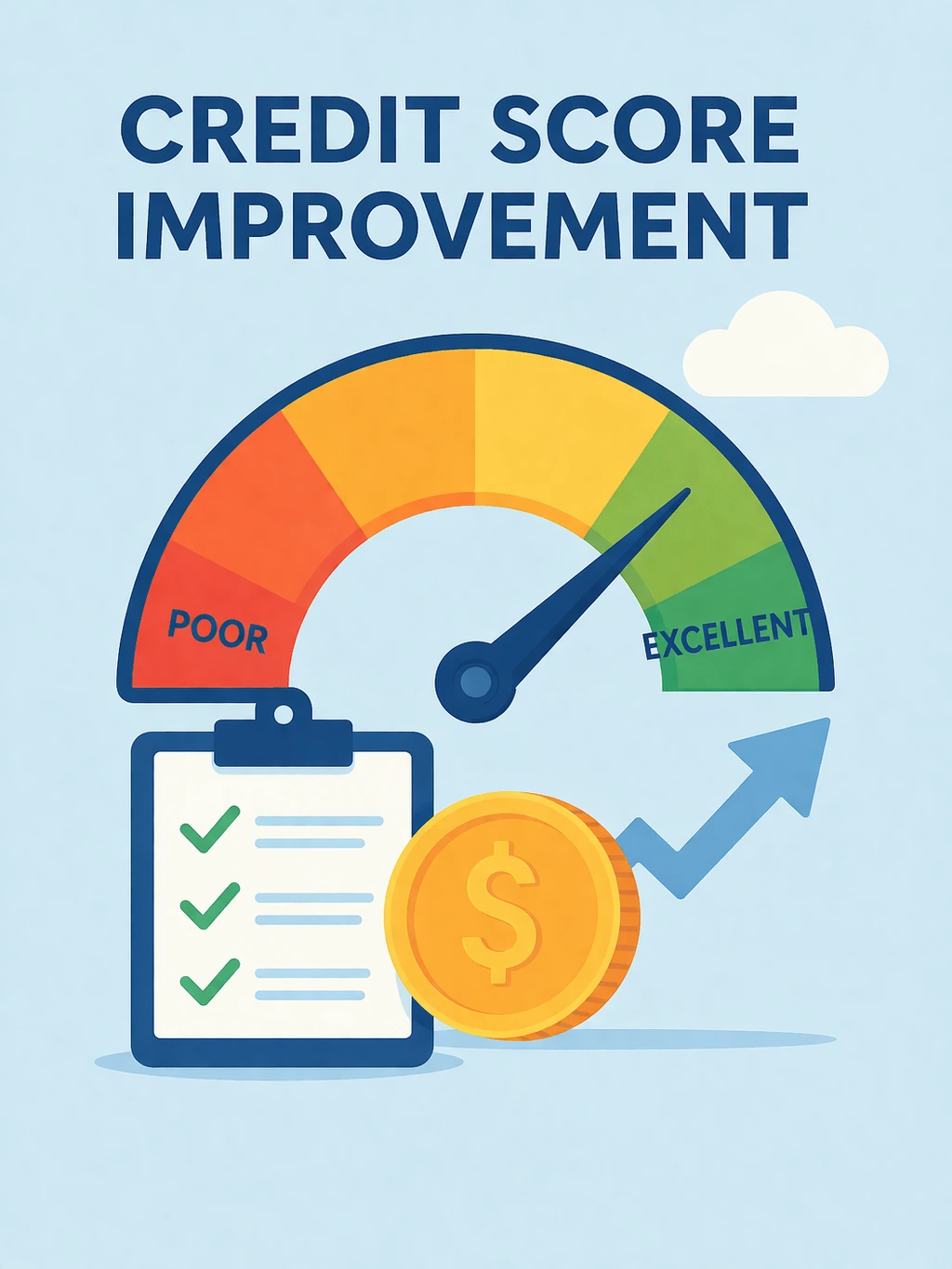
Proven Strategies to Boost Your Score Fast
Your credit score is one of the most powerful numbers in your financial life. It influences your ability to access loans, secure lower interest rates, rent apartments, and even qualify for certain jobs. Whether you’re starting from scratch or trying to recover from past financial mistakes, improving your credit score is entirely possible with the right strategy.
This comprehensive guide breaks down actionable, proven methods to help you improve your credit score efficiently. It includes practical examples, comparisons, and expert-backed insights to ensure long-term financial success.
Table of Contents
- What Is a Credit Score?
- Why Your Credit Score Matters
- How Credit Scores Are Calculated
- Step-by-Step Guide to Improve Your Credit Score
- Common Credit Score Mistakes to Avoid
- Credit Score Improvement Timeline
- Tools and Resources for Monitoring Credit
- Real-Life Examples and Comparisons
- Frequently Asked Questions (FAQs)
- Summary
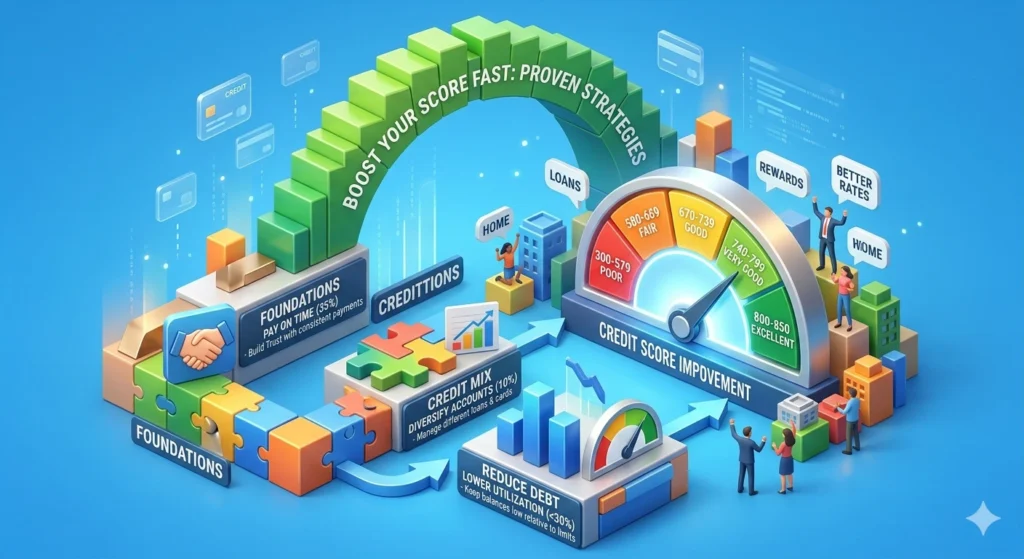
What Is a Credit Score?
A credit score is a three-digit number that represents your creditworthiness. It tells lenders how likely you are to repay borrowed money. Scores typically range from 300 to 850, with higher scores indicating better financial reliability.
Credit Score Ranges
| Score Range | Rating |
|---|---|
| 300–579 | Poor |
| 580–669 | Fair |
| 670–739 | Good |
| 740–799 | Very Good |
| 800–850 | Excellent |
Why Your Credit Score Matters
Your credit score affects multiple aspects of your financial life:
- Loan approvals – Higher chances of approval
- Interest rates – Lower rates save money
- Credit limits – Access to higher limits
- Rental applications – Landlords check credit
- Insurance premiums – Better rates with higher scores
👉 Simply put, a good credit score can save you thousands over time.
How Credit Scores Are Calculated
Understanding the components of your credit score is essential for improving it.
1. Payment History (35%)
Your track record of paying bills on time.
2. Credit Utilization (30%)
The percentage of your available credit you are using.
3. Credit History Length (15%)
How long your credit accounts have been active.
4. Credit Mix (10%)
Variety of credit types (cards, loans, etc.).
5. New Credit (10%)
Recent credit inquiries and newly opened accounts.
Step-by-Step Guide to Improve Your Credit Score
1. Pay Your Bills on Time
This is the most critical factor. Even one missed payment can significantly lower your score.
Action Steps:
- Set automatic payments
- Use reminders or calendar alerts
- Pay at least the minimum amount due
👉 Example:
If you consistently pay your credit card bill before the due date for 6 months, your score can improve noticeably.
2. Reduce Your Credit Utilization Ratio
Keep your usage below 30%, ideally under 10%.
Illustration:
| Credit Limit | Balance | Utilization |
|---|---|---|
| $1,000 | $800 | 80% ❌ |
| $1,000 | $200 | 20% ✅ |
👉 Lower utilization = higher score
3. Avoid Opening Too Many Accounts at Once
Each application results in a hard inquiry, which can slightly reduce your score.
Best Practice:
- Space out credit applications (every 3–6 months)
- Apply only when necessary
4. Keep Old Accounts Open
The length of your credit history matters. Closing old accounts can reduce your score.
👉 Even if you don’t use a card often, keeping it open can benefit your credit profile.
5. Diversify Your Credit Mix
Having a mix of credit types shows lenders you can manage different forms of debt.
Examples:
- Credit cards
- Personal loans
- Auto loans
6. Check Your Credit Report Regularly
Errors can negatively impact your score.
Action Steps:
- Review your report monthly or quarterly
- Dispute inaccuracies immediately
7. Negotiate or Settle Outstanding Debts
If you have unpaid debts:
- Contact creditors to negotiate
- Request a payment plan
- Ask for a “pay-for-delete” agreement if possible
8. Become an Authorized User
You can benefit from someone else’s positive credit history.
👉 Example:
Joining a family member’s well-managed credit card can boost your score quickly.
9. Use Credit Responsibly
Consistency is key:
- Avoid maxing out cards
- Pay more than the minimum when possible
- Maintain steady financial habits
Common Credit Score Mistakes to Avoid
- Missing payments
- Maxing out credit cards
- Closing old accounts
- Ignoring credit reports
- Applying for too much credit at once
👉 Avoiding these mistakes is just as important as following best practices.
Credit Score Improvement Timeline
| Timeframe | Expected Results |
|---|---|
| 1–3 Months | Small improvements |
| 3–6 Months | Noticeable increase |
| 6–12 Months | Significant improvement |
| 1+ Year | Strong, stable credit profile |
Tools and Resources for Monitoring Credit
Consider using:
- Free credit monitoring apps
- Banking apps with credit tracking
- Financial management tools
👉 These tools help you stay informed and proactive.
Real-Life Examples and Comparisons
Case Study 1: High Utilization vs Low Utilization
| Scenario | Score Impact |
|---|---|
| 80% Utilization | Negative |
| 20% Utilization | Positive |
Case Study 2: Late Payments vs On-Time Payments
| Behavior | Result |
|---|---|
| Frequent late payments | Score drops significantly |
| Consistent on-time payments | Score steadily increases |
Frequently Asked Questions (FAQs)
1. How fast can I improve my credit score?
You can see small changes within 30–60 days, but major improvements take several months.
2. Does checking my credit score lower it?
No, checking your own score is a soft inquiry and does not affect your credit.
3. What is the fastest way to boost my score?
Pay down balances and reduce your credit utilization quickly.
4. Can I get a loan with a low credit score?
Yes, but interest rates will likely be higher.
5. Should I close unused credit cards?
No, keeping them open helps your credit history length.
6. What is a good credit utilization rate?
Below 30%, ideally under 10%.
7. Do late payments stay forever?
No, they typically remain on your report for up to 7 years.
8. Can I fix errors on my credit report?
Yes, you can dispute inaccuracies with credit bureaus.
9. Is having no credit bad?
Yes, lenders prefer some credit history over none.
10. Does income affect credit score?
No, your income is not directly included in your credit score.
Summary
Improving your credit score is a gradual but highly rewarding process. By focusing on key factors like payment history, credit utilization, and responsible borrowing, you can steadily increase your score over time.
Consistency, patience, and discipline are essential. Avoid common mistakes, monitor your credit regularly, and adopt smart financial habits. Over time, your improved credit score will unlock better financial opportunities, lower costs, and greater financial freedom.