
Introduction
Credit cards have become an essential part of modern financial life. From online shopping to emergency spending, they offer convenience, flexibility, and opportunities to build a strong financial reputation. However, without the right strategy, they can quickly turn into a source of debt and financial pressure.
A well-planned approach to using credit cards can help you stay in control, earn rewards, and improve your credit score over time. This guide explains practical, real-world credit card strategies that are easy to follow and highly effective.
Understanding How Credit Cards Work
What is a Credit Card?
A credit card is a financial tool that allows you to borrow money from a bank up to a specific limit. Instead of paying immediately, you repay later—either fully or partially.
Paying the full balance each month keeps your account interest-free, while carrying a balance leads to interest charges.
Key Terms You Must Know
| Term | Meaning |
|---|---|
| Credit Limit | Maximum amount you can spend |
| APR | Interest rate applied yearly |
| Minimum Payment | Smallest amount required monthly |
| Billing Cycle | Monthly transaction period |
| Grace Period | Time before interest starts |
Understanding these terms helps you make better financial decisions.
Why Credit Card Strategy Matters
Many people use credit cards casually, without a clear plan. This often leads to overspending and unnecessary debt.
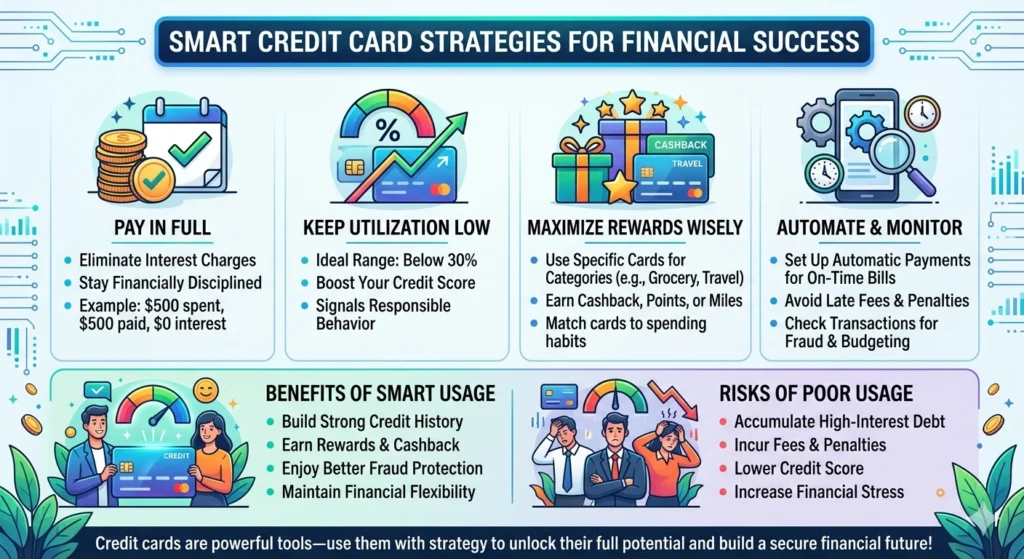
Benefits of Smart Usage
- Builds a strong credit history
- Helps you earn cashback or rewards
- Offers better fraud protection
- Provides financial flexibility
Risks of Poor Usage
- Accumulating high-interest debt
- Late fees and penalties
- Lower credit score
- Financial stress
Having a strategy ensures you enjoy the benefits while avoiding the risks.
Core Credit Card Strategies
Always Pay Your Balance in Full
This is the most effective strategy.
When you pay your full balance every month:
- You avoid interest charges
- You stay financially disciplined
Example:
| Scenario | Amount |
|---|---|
| Purchase | $500 |
| Paid in full | $500 |
| Interest | $0 |
Even a small unpaid balance can attract interest, so consistency is key.
Keep Your Credit Utilization Low
Credit utilization is the percentage of your credit limit you use.
Best Practice:
- Keep it below 30%
- Ideal range: below 10%
Illustration:
| Credit Limit | Ideal Spending |
|---|---|
| $1,000 | $100–$300 |
| $5,000 | $500–$1,500 |
Low utilization signals responsible behavior and improves your credit score.
Use Multiple Cards Strategically
Having more than one credit card can be beneficial when used properly.
| Card Type | Best Use |
|---|---|
| Cashback card | Everyday expenses |
| Travel card | Flights and hotels |
| Low-interest card | Emergencies |
This approach helps you maximize benefits without increasing risk.
Maximize Rewards Programs
Credit cards often provide rewards such as cashback, points, or discounts.
Smart Strategy:
- Use cashback cards for daily purchases
- Use travel cards for bookings
Over time, these rewards can add up significantly.
Automate Your Payments
Missing payments can damage your credit score.
Setting up automatic payments ensures:
- Bills are paid on time
- No late fees
- Consistent credit history
This is one of the easiest ways to maintain financial discipline.
Avoid the Minimum Payment Trap
Paying only the minimum keeps you in debt longer and increases interest costs.
| Balance | Minimum Payment | Outcome |
|---|---|---|
| $1,000 | $25 | Long repayment period |
Always aim to pay more than the minimum whenever possible.
Monitor Your Transactions Regularly
Keeping track of your spending helps you stay in control.
Check your statements to:
- Spot unauthorized transactions
- Correct billing errors
- Understand your spending habits
Use Credit Cards as a Budgeting Tool
Instead of seeing your credit card as extra money, treat it like your own cash.
- Spend within your limits
- Track every purchase
- Plan monthly budgets
This mindset prevents overspending.
Avoid Cash Advances
Cash advances may seem convenient but come with disadvantages:
- Higher interest rates
- Immediate interest charges
- Extra fees
Only use them in urgent situations.
Know When to Upgrade or Cancel
Not all credit cards remain useful forever.
Upgrade if:
- You qualify for better rewards
Cancel if:
- Annual fees exceed benefits
However, avoid closing old cards unnecessarily, as they contribute to your credit history.
Advanced Credit Card Strategies
Balance Transfer Strategy
If you have high-interest debt, transferring it to a card with lower interest can save money.
Benefits:
- Reduced interest payments
- Faster debt repayment
This strategy requires discipline to avoid accumulating new debt.
Using 0% APR Offers
Some credit cards offer zero interest for a limited time.
Use this for:
- Large planned purchases
- Paying off existing debt
Make sure to clear the balance before the promotional period ends.
Credit Card Churning
This involves opening new cards to earn sign-up bonuses.
While it can be rewarding, it also carries risks:
- Too many applications can hurt your credit score
- Mismanagement can lead to debt
This strategy is best for experienced users.
Strategy Comparison Table
| Strategy | Best For | Risk Level |
|---|---|---|
| Paying in full | Everyone | Low |
| Rewards usage | Regular spenders | Low |
| Balance transfer | Debt reduction | Medium |
| Churning | Experts | High |
Real-Life Examples
Smart User
A user spends only on necessary items, pays the full balance every month, and uses a cashback card for groceries.
Result:
- No debt
- Earned rewards
- Strong credit score
Poor User
Another user frequently maxes out their credit card and pays only the minimum amount.
Result:
- High interest debt
- Low credit score
- Financial stress
Common Mistakes to Avoid
- Missing payment deadlines
- Spending beyond your income
- Ignoring interest rates
- Applying for too many cards at once
- Closing old credit accounts
Avoiding these mistakes is just as important as applying good strategies.
How Credit Cards Affect Your Credit Score
Your credit card behavior directly impacts your credit score.
| Factor | Impact |
|---|---|
| Payment history | Very high |
| Credit utilization | High |
| Credit age | Medium |
| New applications | Medium |
Consistent good habits lead to long-term financial benefits.
Tips for Beginners
If you are new to credit cards:
- Start with one card
- Use it for small purchases
- Pay on time every month
- Learn how billing works
Building good habits early makes a big difference.
Financial Security Tips
Protecting your credit card is essential.
- Enable transaction alerts
- Avoid using public Wi-Fi for payments
- Use secure websites
- Report lost or stolen cards immediately
These steps help prevent fraud and financial loss.
Credit Card vs Debit Card
| Feature | Credit Card | Debit Card |
|---|---|---|
| Borrowing | Yes | No |
| Rewards | Yes | Rare |
| Fraud protection | Strong | Moderate |
| Builds credit | Yes | No |
Both have their place, but credit cards offer more long-term benefits when used responsibly.
When Credit Cards Are Useful
- Building credit history
- Managing temporary expenses
- Earning rewards on purchases
When to Avoid Credit Cards
- When already struggling with debt
- For unnecessary or impulsive purchases
- When you cannot repay the balance
Summary
Credit card strategies are about control, discipline, and smart decision-making. When used correctly, credit cards can help you build a strong financial future.
Key points to remember:
- Pay your balance in full whenever possible
- Keep your credit utilization low
- Use rewards wisely
- Avoid unnecessary debt
- Monitor your account regularly
With these strategies, your credit card becomes a powerful financial tool rather than a burden.