
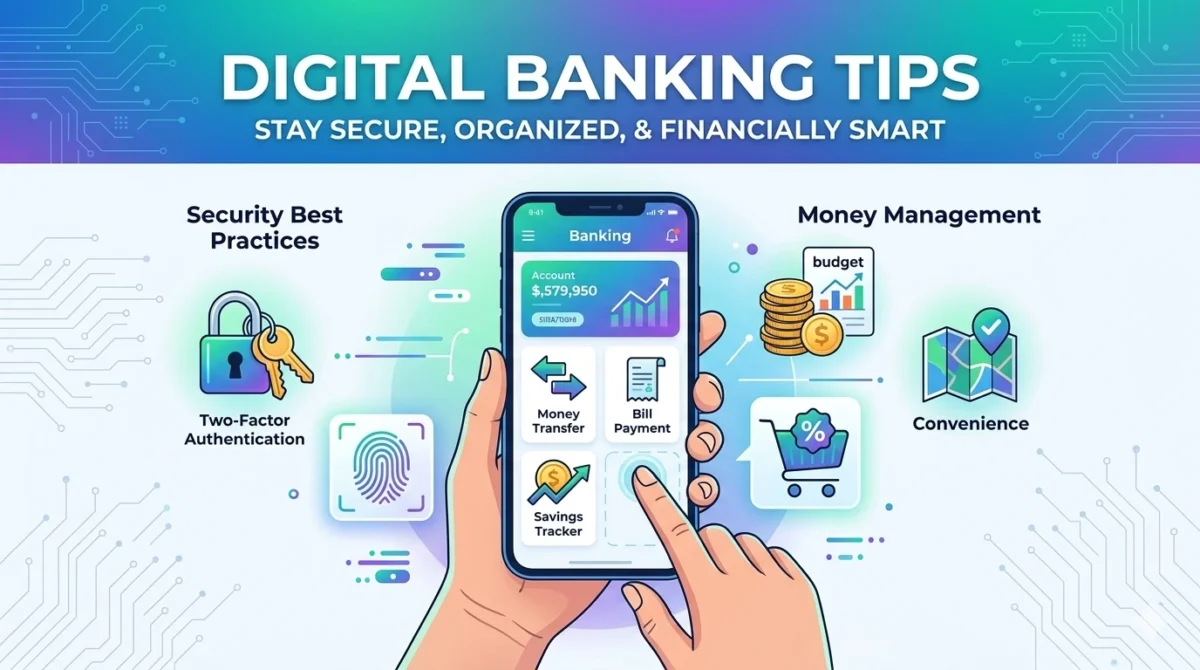
Introduction
Digital banking has transformed the way people manage money. From checking account balances to transferring funds and paying bills, everything can now be done from a smartphone or computer. This convenience saves time, reduces stress, and provides greater control over personal finances.
However, while digital banking offers many advantages, it also requires awareness, discipline, and security-conscious behavior. Without proper knowledge, users can fall victim to fraud, overspending, or poor financial management.
This comprehensive guide explores practical and effective digital banking tips to help you stay secure, organized, and financially smart in today’s digital world. Whether you are new to online banking or looking to improve your habits, this guide will give you everything you need.
Table of Contents
- What is Digital Banking
- Benefits of Digital Banking
- Risks of Digital Banking
- Core Digital Banking Tips
- Security Best Practices
- Managing Your Money Digitally
- Digital Banking Tools and Features
- Comparing Digital vs Traditional Banking
- Real-Life Examples
- Common Mistakes to Avoid
- Advanced Digital Banking Strategies
- Digital Banking for Beginners
- Financial Discipline in Digital Banking
- Summary
- FAQs
What is Digital Banking?
Digital banking refers to accessing and managing financial services through digital platforms such as mobile apps, websites, and online portals.
Key Services Include:
- Checking account balances
- Transferring money
- Paying bills
- Applying for loans
- Managing savings
Digital banking eliminates the need to visit physical bank branches for most transactions.
Benefits of Digital Banking
Convenience
You can access your account anytime, anywhere.
Speed
Transactions like transfers and payments are completed instantly or within minutes.
Cost-Effective
Many digital banking services have lower fees compared to traditional banking.
Better Financial Tracking
Apps provide real-time updates, making it easier to monitor spending.
Risks of Digital Banking
While digital banking is beneficial, it also comes with risks:
- Cybersecurity threats
- Phishing scams
- Unauthorized access
- Data breaches
Understanding these risks is essential for safe usage.
Core Digital Banking Tips
Use Strong and Unique Passwords
Your password is your first line of defense.
Best Practices:
- Use a mix of letters, numbers, and symbols
- Avoid using personal information
- Change passwords regularly
Enable Two-Factor Authentication (2FA)
This adds an extra layer of security.
Even if someone gets your password, they cannot access your account without a second verification step.
Regularly Monitor Your Account
Check your account frequently to:
- Detect unauthorized transactions
- Track your spending
- Avoid errors
Use Official Banking Apps Only
Always download apps from trusted sources such as official app stores.
Avoid clicking unknown links that may lead to fake banking platforms.
Avoid Public Wi-Fi for Transactions
Public networks are not secure.
Always use:
- Private Wi-Fi
- Mobile data
Security Best Practices
Recognize Phishing Attempts
Phishing involves fake messages pretending to be from your bank.
Signs of phishing:
- Urgent requests
- Suspicious links
- Requests for personal information
Keep Your Devices Updated
Updates fix security vulnerabilities.
Always:
- Update your apps
- Update your phone or computer system
Log Out After Use
Especially when using shared or public devices.
Use Biometric Security
Features like fingerprint or face recognition provide added protection.
Managing Your Money Digitally
Set Up Budgeting Tools
Most banking apps offer budgeting features.
Track:
- Income
- Expenses
- Savings
Automate Bill Payments
This ensures:
- Timely payments
- No late fees
Set Spending Alerts
Receive notifications when:
- You spend above a limit
- Large transactions occur
Categorize Expenses
Divide spending into categories:
| Category | Example |
|---|---|
| Food | Groceries |
| Transport | Fuel |
| Bills | Electricity |
This helps identify unnecessary expenses.
Digital Banking Tools and Features
Mobile Banking Apps
Provide full account control on your phone.
Online Transfers
Send money instantly to others.
Digital Wallets
Store and use money electronically.
Virtual Cards
Safer for online shopping.
Comparing Digital vs Traditional Banking
| Feature | Digital Banking | Traditional Banking |
|---|---|---|
| Accessibility | 24/7 | Limited hours |
| Speed | Fast | Slower |
| Fees | Lower | Higher |
| Convenience | High | Moderate |
Digital banking clearly offers more flexibility.
Real-Life Examples
Example 1: Smart User
- Uses mobile banking app daily
- Tracks expenses
- Enables alerts
Result: Better financial control and savings
Example 2: Careless User
- Shares passwords
- Uses public Wi-Fi
- Ignores alerts
Result: Risk of fraud and financial loss
Common Mistakes to Avoid
- Using weak passwords
- Ignoring security updates
- Clicking suspicious links
- Not checking account regularly
- Overspending due to easy access
Advanced Digital Banking Strategies
Use Multiple Accounts
Separate accounts for:
- Savings
- Spending
- Emergency funds
Leverage Financial Insights
Many apps provide:
- Spending analysis
- Savings recommendations
Link Accounts Wisely
Connect accounts only when necessary to avoid security risks.
Digital Banking for Beginners
If you are new:
- Start with basic features
- Learn gradually
- Avoid complex transactions initially
Financial Discipline in Digital Banking
Digital access makes spending easier—but discipline is key.
Tips:
- Set monthly budgets
- Avoid impulse purchases
- Track every transaction
Digital Banking and Financial Security
To stay secure:
- Enable alerts
- Use strong passwords
- Avoid sharing sensitive information
Future of Digital Banking
Digital banking is evolving rapidly with:
- Artificial intelligence
- Contactless payments
- Blockchain technology
Staying informed helps you adapt and benefit from these changes.
Summary
Digital banking offers convenience, speed, and efficiency, but it requires responsible usage.
Key takeaways:
- Protect your account with strong security measures
- Monitor your transactions regularly
- Use tools to manage your finances
- Avoid risky behaviors online
- Stay disciplined with spending
When used wisely, digital banking becomes a powerful tool for financial success.
Frequently Asked Questions (FAQs)
1. What is digital banking?
It is managing financial activities through online platforms and mobile apps.
2. Is digital banking safe?
Yes, if proper security measures are followed.
3. How can I protect my account?
Use strong passwords and enable two-factor authentication.
4. Can I trust mobile banking apps?
Yes, if downloaded from official sources.
5. What should I do if I notice fraud?
Report immediately to your bank.
6. Are digital banks cheaper?
Generally, yes, with lower fees.
7. Can I manage all finances online?
Yes, most services are available digitally.
8. What is a digital wallet?
An app that stores money for transactions.
9. Is public Wi-Fi safe for banking?
No, it is risky.
10. How often should I check my account?
At least a few times per week.