
Proven Strategies to Protect, Grow, and Sustain Your Wealth
Financial security isn’t about being rich—it’s about being prepared.
In today’s unpredictable world, one unexpected expense, job loss, or economic shift can shake your entire financial life. Yet, millions of people live without a solid financial safety net—not because they lack income, but because they lack strategy.
Here’s the truth:
Financial security is built through consistent habits, smart decisions, and long-term planning—not luck.
Whether you’re just starting your financial journey or looking to strengthen your current position, this comprehensive guide will show you practical, proven financial security tips that actually work.
Table of Contents
- What Is Financial Security?
- Why Financial Security Matters
- Core Pillars of Financial Security
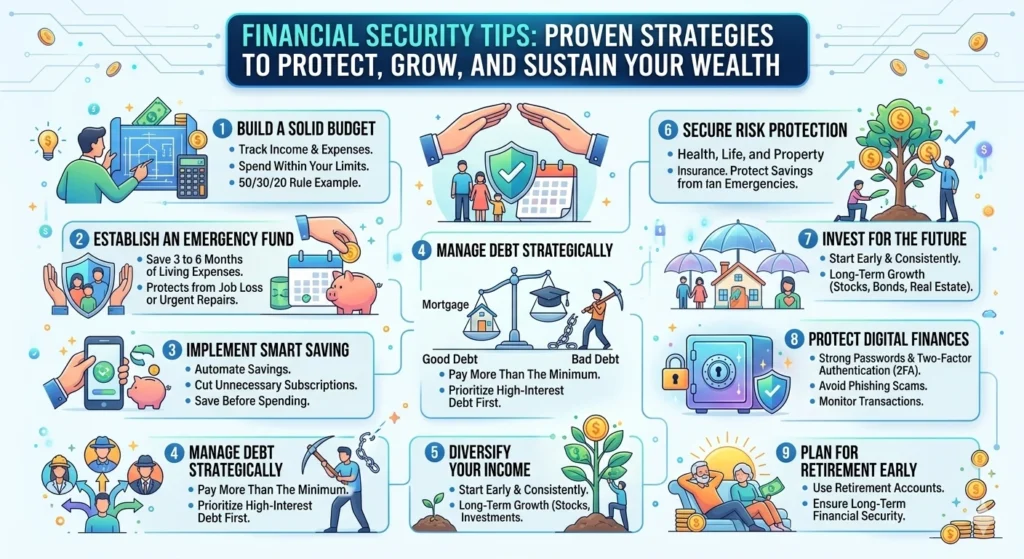
- Budgeting: The Foundation of Stability
- Emergency Funds: Your Financial Safety Net
- Smart Saving Strategies
- Managing Debt Effectively
- Income Diversification
- Insurance and Risk Protection
- Investing for Long-Term Security
- Protecting Against Inflation
- Digital Financial Security Tips
- Retirement Planning Essentials
- Common Mistakes to Avoid
- Real-Life Examples
- Financial Security Comparison Tables
- FAQs
- Summary
What Is Financial Security?
Financial security means having enough resources to cover your needs, handle emergencies, and plan for the future without stress.
It includes:
- Stable income
- Savings and investments
- Low or manageable debt
- Protection against risks
Why Financial Security Matters
Without financial security:
- Stress increases
- Debt grows
- Opportunities decrease
With financial security:
- You gain peace of mind
- You make better decisions
- You build long-term wealth
Core Pillars of Financial Security
1. Income Stability
2. Expense Control
3. Savings & Investments
4. Risk Protection
5. Financial Discipline
Think of these pillars as the foundation of your financial life.
Budgeting: The Foundation of Stability
A budget is your financial blueprint.
Simple Budget Rule (50/30/20):
| Category | Percentage | Example ($1,000 Income) |
|---|---|---|
| Needs | 50% | $500 |
| Wants | 30% | $300 |
| Savings | 20% | $200 |
Illustration:
If you earn monthly:
- Spend wisely on essentials
- Limit unnecessary expenses
- Save consistently
Emergency Funds: Your Financial Safety Net
An emergency fund protects you from unexpected events like:
- Job loss
- Medical emergencies
- Urgent repairs
Recommended Amount:
- 3 to 6 months of living expenses
Example:
| Monthly Expenses | Emergency Fund Target |
|---|---|
| $500 | $1,500 – $3,000 |
| $1,000 | $3,000 – $6,000 |
Smart Saving Strategies
Saving money isn’t about how much you earn—it’s about how much you keep.
Effective Saving Tips:
- Automate savings
- Save before spending
- Cut unnecessary subscriptions
- Use high-interest savings accounts
Example:
Saving $5 daily = $150/month = $1,800/year
Managing Debt Effectively
Debt can destroy financial security if unmanaged.
Types of Debt:
| Type | Good/Bad | Example |
|---|---|---|
| Mortgage | Good | House loan |
| Student Loan | Good | Education |
| Credit Card | Bad | High interest |
Strategies:
- Pay more than minimum
- Prioritize high-interest debt
- Avoid unnecessary borrowing
Income Diversification
Relying on one income source is risky.
Ways to Diversify Income:
- Freelancing
- Online business
- Investments
- Side hustles
Example:
If your salary is $800/month:
- Add $200 from side income
- Total becomes $1,000
Insurance and Risk Protection
Insurance protects your financial future.
Types of Insurance:
- Health insurance
- Life insurance
- Property insurance
Why It Matters:
Without insurance, one emergency can wipe out years of savings.
Investing for Long-Term Security
Saving alone is not enough—you must invest.
Investment Options:
| Investment Type | Risk Level | Return Potential |
|---|---|---|
| Savings Account | Low | Low |
| Stocks | High | High |
| Bonds | Medium | Medium |
| Real Estate | Medium | High |
Example:
Investing $100 monthly with growth can multiply over time.
Protecting Against Inflation
Inflation reduces purchasing power.
Strategy:
- Invest in assets that grow
- Increase income over time
- Avoid keeping too much idle cash
Digital Financial Security Tips
In today’s digital world, protecting your finances online is critical.
Best Practices:
- Use strong passwords
- Enable two-factor authentication
- Avoid phishing scams
- Monitor transactions regularly
Retirement Planning Essentials
It’s never too early to plan for retirement.
Key Steps:
- Start saving early
- Use retirement accounts
- Invest consistently
Example:
Saving $50/month from age 25 grows significantly by retirement.
Common Mistakes to Avoid
1. Not Saving at All
2. Living Beyond Means
3. Ignoring Insurance
4. Delaying Investments
5. Depending on One Income
Real-Life Examples
Example 1: Financially Secure Person
- Budgeted income
- Maintains savings
- Invests regularly
Result: Stability and growth
Example 2: Financially Unstable Person
- No savings
- High debt
- No planning
Result: Constant stress
Financial Security Comparison Tables
Secure vs Insecure Financial Habits
| Secure Habits | Insecure Habits |
|---|---|
| Saving regularly | Spending impulsively |
| Investing | Avoiding investments |
| Budgeting | No financial plan |
| Multiple income streams | Single income reliance |
Short-Term vs Long-Term Focus
| Short-Term Thinking | Long-Term Thinking |
|---|---|
| Instant spending | Delayed gratification |
| No savings | Consistent savings |
| Debt accumulation | Wealth building |
Frequently Asked Questions (FAQs)
1. What is financial security?
Having enough money to meet needs and handle emergencies.
2. How much should I save monthly?
At least 20% of your income if possible.
3. What is an emergency fund?
Savings set aside for unexpected expenses.
4. Is debt always bad?
No, but high-interest debt is risky.
5. How can I increase financial security quickly?
Reduce expenses, save more, and diversify income.
6. Should I invest or save first?
Start with savings, then invest.
7. How do I protect my finances online?
Use secure passwords and monitor accounts.
8. What is the best investment?
Depends on your goals and risk tolerance.
9. Why is budgeting important?
It helps control spending and increase savings.
10. When should I start planning for retirement?
As early as possible.
Summary
Financial security is not a destination—it’s a journey built on discipline and smart choices.
To achieve it:
- Budget your income
- Save consistently
- Manage debt wisely
- Invest for the future
- Protect your finances
When you apply these strategies consistently, you create a life where money supports you—not controls you.