
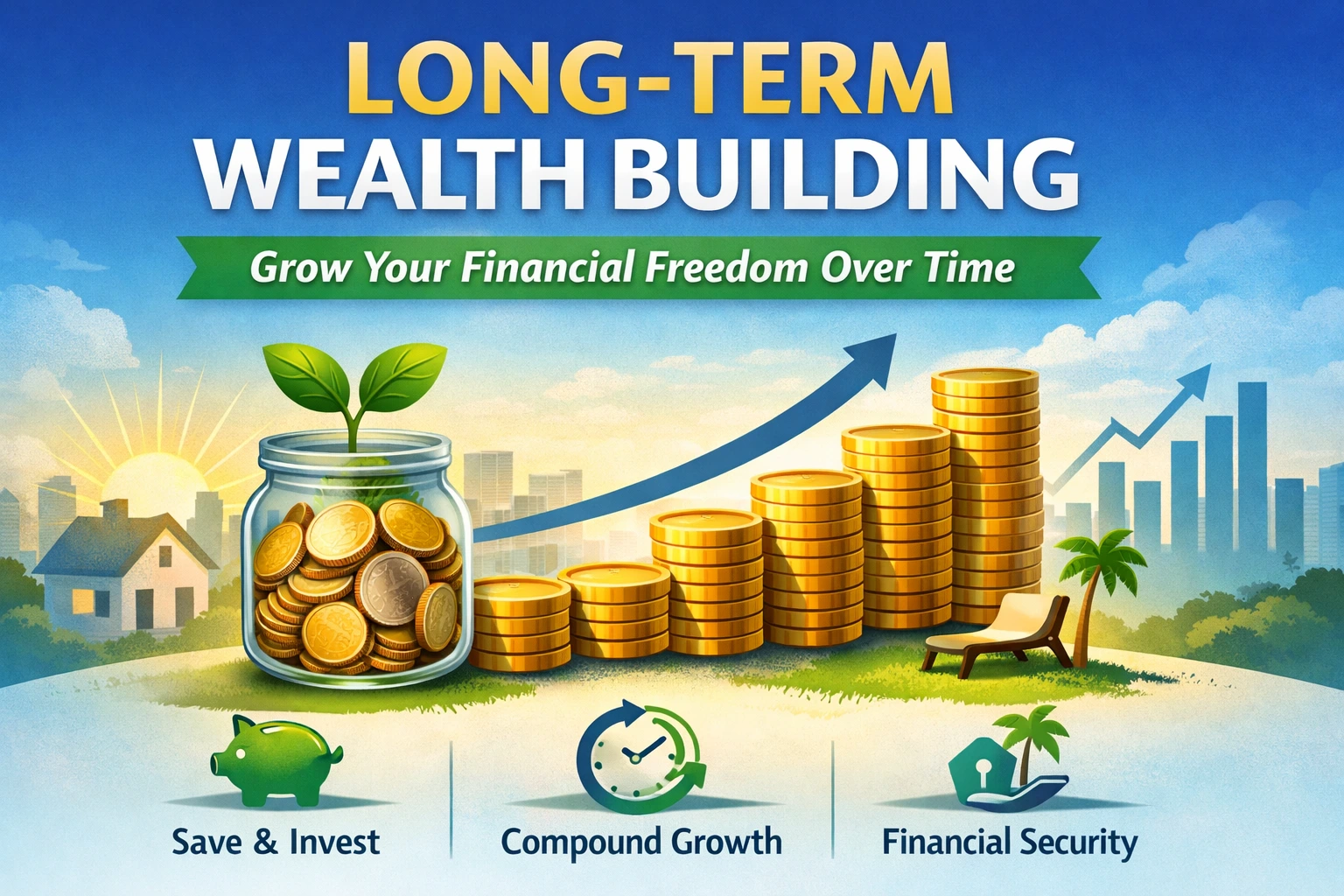
Proven Strategies to Grow Financial Freedom Over Time
Building wealth is not about getting rich overnight. Most financially successful people build their wealth slowly, consistently, and strategically over many years. Long-term wealth building focuses on smart financial habits, disciplined investing, and patience.
Many beginners think wealth comes from high salaries or lucky investments. However, the truth is that long-term financial growth usually comes from simple strategies practiced consistently.
If you save regularly, invest wisely, and allow your money to grow over time, your wealth can increase significantly through compound growth and smart financial planning.
In this complete guide, you will learn:
- What long-term wealth building really means
- Why time is the most powerful wealth-building tool
- Step-by-step strategies for building lasting wealth
- Investment approaches that grow money over decades
- Real-life examples and illustrations
- Common mistakes that prevent wealth growth
Whether you are just starting your financial journey or looking to strengthen your strategy, this guide will help you build sustainable wealth and financial security over time.
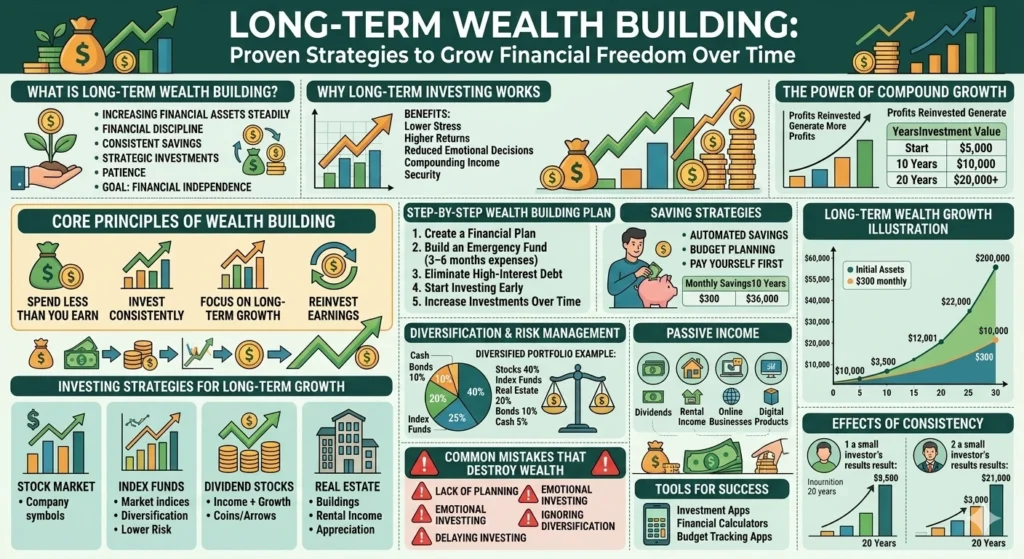
Table of Contents
- What Is Long-Term Wealth Building
- Why Long-Term Investing Works
- The Power of Compound Growth
- Core Principles of Wealth Building
- Step-by-Step Wealth Building Plan
- Saving Strategies That Build Wealth
- Investing Strategies for Long-Term Growth
- Diversification and Risk Management
- Passive Income and Wealth Creation
- Illustration: Long-Term Wealth Growth Example
- Effects of Consistency in Investing
- Common Mistakes That Destroy Wealth
- Tools That Help Grow Wealth
- Practical Instances of Wealth Builders
- Final Thoughts on Building Wealth
- Frequently Asked Questions (FAQ)
What Is Long-Term Wealth Building
Long-term wealth building refers to the process of increasing your financial assets steadily over many years through saving, investing, and smart financial decisions.
Instead of focusing on quick profits, long-term wealth builders focus on:
- Financial discipline
- Strategic investments
- Consistent savings
- Patience
Wealth usually grows through assets such as:
- Stocks
- Real estate
- Businesses
- Investment funds
- Dividend-paying companies
The goal is to build financial resources that generate income, grow in value, and support financial independence in the future.
Why Long-Term Investing Works
Long-term investing is effective because it allows investors to benefit from time and compounding growth.
Markets may fluctuate in the short term, but historically, long-term investments tend to grow.
Benefits of Long-Term Investing
- Lower investment stress
- Higher potential returns
- Reduced emotional decisions
- Compounding income growth
- Financial security over time
When investors stay consistent and patient, their wealth can grow significantly over decades.
The Power of Compound Growth
Compound growth is one of the strongest forces in wealth building.
Compounding occurs when investment returns generate additional returns over time.
Example:
If you invest money and earn profits, those profits are reinvested to generate more profits.
This creates exponential growth.
Wealth Growth Illustration
| Years | Investment Value |
|---|---|
| Start | $5,000 |
| 5 Years | $7,000 |
| 10 Years | $10,000 |
| 20 Years | $20,000+ |
As time passes, growth becomes faster.
This is why early investing is extremely powerful.
Core Principles of Wealth Building
Successful long-term investors follow certain financial principles.
Spend Less Than You Earn
Saving money creates the capital needed for investing.
Without savings, wealth cannot grow.
Invest Consistently
Investing small amounts regularly can build significant wealth over time.
Consistency matters more than timing the market.
Focus on Long-Term Growth
Short-term market fluctuations should not influence long-term strategies.
Patience is critical.
Reinvest Earnings
Reinvesting profits allows investments to compound.
This dramatically accelerates wealth growth.
Step-by-Step Wealth Building Plan
Building wealth becomes easier when broken down into simple steps.
Step 1 Create a Financial Plan
Start with clear financial goals such as:
- Buying a home
- Retirement savings
- Financial independence
A clear plan helps guide your decisions.
Step 2 Build an Emergency Fund
Before investing, create a financial safety net.
Most experts recommend saving 3–6 months of living expenses.
This prevents selling investments during emergencies.
Step 3 Eliminate High-Interest Debt
Debt with high interest slows wealth growth.
Reducing or eliminating debt allows more money for investing.
Step 4 Start Investing Early
Time is the most powerful factor in wealth building.
Even small investments grow significantly over long periods.
Step 5 Increase Investments Over Time
As income increases, increase savings and investments.
This accelerates financial growth.
Saving Strategies That Build Wealth
Saving money is the foundation of wealth building.
Without consistent savings, investing becomes difficult.
Effective Saving Methods
Automated Savings
Set automatic transfers to savings or investment accounts.
Budget Planning
Track income and expenses to control spending.
Pay Yourself First
Save money before spending on non-essential items.
Illustration of Monthly Savings
| Monthly Savings | 10 Years |
|---|---|
| $100 | $12,000 |
| $300 | $36,000 |
| $500 | $60,000 |
When invested, these amounts can grow significantly.
Investing Strategies for Long-Term Growth
Investing allows money to grow faster than traditional savings.
Different investment options support wealth building.
Stock Market Investing
Stocks allow investors to own shares in companies.
Over long periods, stocks historically provide strong returns.
Index Funds
Index funds track entire market indexes.
Benefits include:
- Diversification
- Lower risk
- Lower fees
Dividend Stocks
Dividend-paying companies provide income while investments grow.
This creates both cash flow and capital growth.
Real Estate Investments
Real estate can generate:
- Rental income
- Property appreciation
It is a common long-term wealth-building asset.
Diversification and Risk Management
Diversification reduces investment risk.
Instead of investing in a single asset, investors spread their money across multiple investments.
Diversified Portfolio Example
| Asset Type | Allocation |
|---|---|
| Stocks | 40% |
| Index Funds | 25% |
| Real Estate | 20% |
| Bonds | 10% |
| Cash | 5% |
This balanced portfolio reduces exposure to market volatility.
Passive Income and Wealth Creation
Passive income is money earned without constant work.
It plays a major role in wealth building.
Examples of Passive Income
- Dividend income
- Rental income
- Online businesses
- Digital products
- Investment funds
Passive income allows wealth to grow even when you are not actively working.
Illustration: Long-Term Wealth Growth Example
Consider an investor who starts early.
Scenario
Initial Investment: $10,000
Monthly Investment: $300
Average Annual Return: 8%
Investment Growth
| Years | Investment Value |
|---|---|
| 5 Years | $32,000 |
| 10 Years | $64,000 |
| 20 Years | $178,000 |
| 30 Years | $450,000+ |
This example shows how consistent investing creates powerful long-term wealth growth.
Effects of Consistency in Investing
Consistency is more important than investing large amounts.
Small contributions made regularly produce strong results.
Example
Two investors:
Investor A invests $10,000 once.
Investor B invests $200 monthly.
After 20 years, Investor B often accumulates more wealth due to consistent investing and compounding.
Common Mistakes That Destroy Wealth
Many people struggle to build wealth because of common financial mistakes.
Lack of Financial Planning
Without clear goals, investments may become inconsistent.
Emotional Investing
Fear and panic during market downturns cause investors to sell prematurely.
Ignoring Diversification
Concentrating investments in a single asset increases risk.
Delaying Investing
The longer you wait to invest, the less time your money has to grow.
Tools That Help Grow Wealth
Several tools can help investors build and track wealth.
Investment Apps
Many online platforms allow beginners to invest easily.
Financial Calculators
These tools estimate long-term investment growth.
Budget Tracking Apps
Tracking spending helps increase savings and investment contributions.
Practical Instances of Wealth Builders
Many successful investors built wealth through long-term strategies.
Example 1: The Consistent Saver
A person saving $400 monthly and investing consistently could accumulate hundreds of thousands over decades.
Example 2: The Early Investor
Someone who begins investing at age 22 may build more wealth than someone starting at age 35.
Example 3: Dividend Investor
An investor building a dividend portfolio can eventually receive regular passive income payments.
Final Thoughts on Long-Term Wealth Building
Long-term wealth building is not about luck or quick profits.
It is about discipline, patience, and strategic financial decisions.
By following simple habits such as saving regularly, investing consistently, diversifying assets, and reinvesting profits, anyone can gradually build financial security.
The most important step is simply starting today.
Even small investments can grow into significant wealth over time.
Frequently Asked Questions (FAQ)
1 What is long-term wealth building?
Long-term wealth building is the process of growing financial assets steadily over many years through saving, investing, and strategic financial planning.
2 Why is time important in wealth building?
Time allows investments to compound, which significantly increases returns over long periods.
3 How much should I save to build wealth?
Many experts recommend saving at least 20% of your income for long-term financial growth.
4 What investments help build wealth?
Common wealth-building investments include stocks, index funds, real estate, and dividend-paying companies.
5 Can beginners build wealth through investing?
Yes. Beginners can build wealth by starting small, investing consistently, and focusing on long-term strategies.
6 What is compound growth?
Compound growth occurs when investment earnings generate additional earnings over time.
7 How long does it take to build wealth?
Wealth building typically takes many years, but consistent investing accelerates financial growth.
8 Should I invest or save first?
Saving creates the capital needed for investing, so both are important for financial growth.
9 Is long-term investing risky?
All investments carry some risk, but long-term investing generally reduces the impact of short-term market fluctuations.
10 What is the best strategy for building wealth?
The best strategy combines consistent savings, diversified investments, and long-term financial discipline.