
A Complete Beginner-to-Advanced Guide
Real estate has created more millionaires than almost any other investment class—and for good reason. It offers steady income, long-term appreciation, and financial security when done right.
But here’s the truth: many beginners jump in blindly and lose money because they don’t understand the basics.
This guide will walk you step by step, in the simplest way possible, so anyone—no matter your starting point—can confidently invest in real estate and grow wealth over time.
Before diving into property investing, it’s important to understand the fundamentals of money growth—start with our complete guide on
investing for beginners.
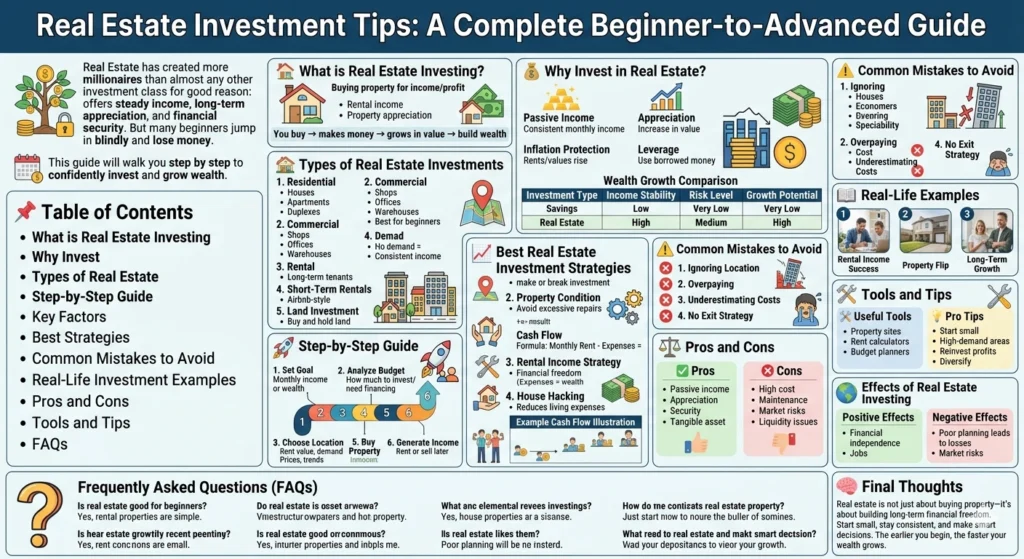
📌 Table of Contents
- What is Real Estate Investing
- Why Invest in Real Estate
- Types of Real Estate Investments
- Step-by-Step Guide to Getting Started
- Key Factors to Consider Before Investing
- Best Real Estate Investment Strategies
- Common Mistakes to Avoid
- Real-Life Investment Examples
- Pros and Cons of Real Estate Investing
- Tools and Tips for Success
- Frequently Asked Questions (FAQs)
🏠 What is Real Estate Investing?
Real estate investing means buying property to generate income or profit.
This can happen in two main ways:
- Rental income (monthly cash flow)
- Property appreciation (increase in value over time)
In simple terms:
👉 You buy a property → it makes money → it grows in value → you build wealth.
💰 Why Invest in Real Estate?
Real estate is powerful because it combines multiple wealth-building benefits:
✔️ 1. Passive Income
Rental properties can generate consistent monthly income.
✔️ 2. Appreciation
Properties tend to increase in value over time.
✔️ 3. Inflation Protection
As prices rise, so do rents and property values.
✔️ 4. Leverage
You can invest with borrowed money (mortgage).
📊 Illustration: Wealth Growth Comparison
| Investment Type | Income Stability | Risk Level | Growth Potential |
|---|---|---|---|
| Savings | Low | Very Low | Very Low |
| Stocks | Medium | Medium | High |
| Real Estate | High | Medium | High |
🏘️ Types of Real Estate Investments
Understanding your options is key before investing.
1. Residential Properties
- Houses
- Apartments
- Duplexes
👉 Best for beginners
2. Commercial Properties
- Shops
- Offices
- Warehouses
👉 Higher income, higher risk
3. Rental Properties
- Long-term tenants
👉 Steady monthly income
4. Short-Term Rentals
- Airbnb-style properties
👉 Higher returns, more management
5. Land Investment
- Buy and hold undeveloped land
👉 Long-term appreciation
🚀 Step-by-Step Guide to Start Investing
Step 1: Set Your Investment Goal
Ask yourself:
- Do I want monthly income?
- Or long-term wealth?
Step 2: Analyze Your Budget
Know:
- How much you can invest
- Whether you need financing
Step 3: Choose the Right Location
Location determines:
- Rent value
- Property demand
- Future growth
Step 4: Research the Market
Look at:
- Property prices
- Rental rates
- Demand trends
Step 5: Buy the Property
- Negotiate price
- Inspect property
- Complete legal documents
Step 6: Generate Income
- Rent it out
OR - Sell later for profit
📍 Key Factors to Consider Before Investing
✔️ Location
The number one rule:
👉 “Location can make or break your investment.”
✔️ Property Condition
Avoid properties needing excessive repairs unless you’re experienced.
✔️ Cash Flow
Formula:
Monthly Rent – Expenses = Profit
✔️ Demand
High demand = easier to rent = consistent income
📈 Best Real Estate Investment Strategies
1. Buy and Hold
Buy property → rent it → hold for years
👉 Best for long-term wealth
2. Fix and Flip
Buy cheap → renovate → sell at profit
👉 Requires experience
3. Rental Income Strategy
Focus on monthly income
👉 Ideal for financial freedom
4. House Hacking
Live in part of the property, rent the rest
👉 Reduces living expenses
📊 Example Cash Flow Illustration
| Property Price | Rent | Expenses | Monthly Profit |
|---|---|---|---|
| $50,000 | $500 | $200 | $300 |
Real estate is just one of many ways to earn consistent income—explore more opportunities in our guide on
passive income investments.
⚠️ Common Mistakes to Avoid
❌ 1. Ignoring Location
Cheap property in bad location = bad investment
❌ 2. Overpaying
Always negotiate and research prices
❌ 3. Underestimating Costs
Repairs, taxes, maintenance add up
❌ 4. No Exit Strategy
Always plan:
- Sell?
- Rent?
- Flip?
📖 Real-Life Investment Examples
Example 1: Rental Income Success
- Bought property: $40,000
- Monthly rent: $400
- Expenses: $150
👉 Profit: $250/month
Example 2: Property Flip
- Bought: $30,000
- Renovation: $10,000
- Sold: $55,000
👉 Profit: $15,000
Example 3: Long-Term Growth
- Bought: $20,000
- Value after 10 years: $60,000
👉 Profit: $40,000
⚖️ Pros and Cons of Real Estate Investing
✅ Pros
- Passive income
- Long-term appreciation
- Financial security
- Tangible asset
❌ Cons
- High startup cost
- Maintenance required
- Market risks
- Liquidity issues
🛠️ Tools and Tips for Success
🔧 Useful Tools
- Property listing websites
- Rent calculators
- Budget planners
💡 Pro Tips
- Start small
- Focus on high-demand areas
- Reinvest your profits
- Diversify your investments
🌍 Effects of Real Estate Investing
Positive Effects
- Financial independence
- Wealth creation
- Job opportunities
Negative Effects
- Poor planning can lead to losses
- Market downturn risks
❓ Frequently Asked Questions (FAQs)
1. Is real estate good for beginners?
Yes, especially rental properties—they are simple and reliable.
2. How much money do I need to start?
It depends on location, but you can start small or use financing.
3. Is real estate better than stocks?
Both are good—real estate offers stability, stocks offer flexibility.
4. Can I invest with no money?
Yes, through partnerships or loans.
5. What is the safest real estate investment?
Rental properties in high-demand areas.
6. How do I choose the right property?
Focus on location, demand, and price.
7. How long should I hold property?
At least 5–10 years for maximum growth.
8. What are the risks?
Market changes, maintenance costs, and bad tenants.
9. Can real estate make me rich?
Yes, with the right strategy and consistency.
10. Should I manage property myself?
Beginners can start themselves, then hire managers later.
To build a solid financial future, combine property investing with long-term strategies—learn more in our guide on
long-term wealth building.
🧠 Final Thoughts
Real estate investing is not just about buying property—it’s about building long-term financial freedom.
Start small, stay consistent, and make smart decisions.
👉 The earlier you begin, the faster your wealth grows.