
A Complete Guide to Protect Your Finances from Unexpected Expenses
Life is unpredictable. One day everything is going smoothly, and the next day an unexpected expense appears — medical bills, car repairs, job loss, or urgent family needs. When these situations happen without financial preparation, they can create serious stress and even debt.
This is where emergency fund planning becomes essential.
An emergency fund is a financial safety net designed to cover unexpected expenses without forcing you to borrow money or disrupt your financial goals. It gives you stability, peace of mind, and the ability to handle life’s surprises confidently.
Many people assume building an emergency fund requires a large income or complicated financial strategies. The truth is much simpler. With the right approach and consistent habits, anyone can build an effective emergency fund over time.
In this guide, you will learn:
- What an emergency fund is and why it matters
- How much emergency savings you really need
- Step-by-step emergency fund planning strategies
- Practical examples and charts
- Common mistakes to avoid
- Tips to build your fund faster
If you are still struggling with saving consistently, you should first read our guide on
Saving Money Faster.
By the end of this article, you will have a clear, practical plan to create and grow your emergency fund.
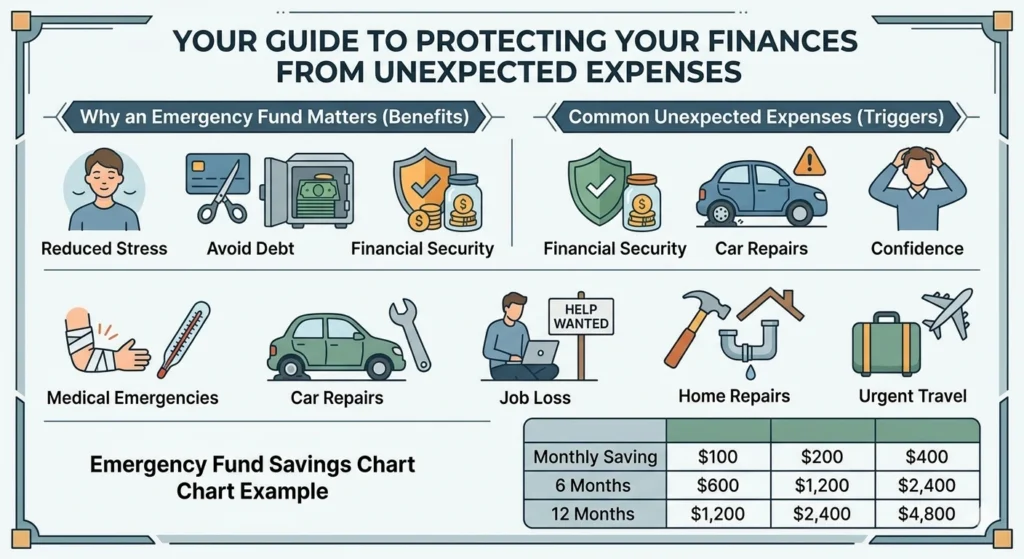
Table of Contents
- What Is an Emergency Fund
- Why Emergency Fund Planning Is Important
- Common Emergencies That Require Savings
- How Much Emergency Fund You Need
- Step-by-Step Emergency Fund Planning Guide
- Emergency Fund Savings Chart Example
- Real-Life Examples of Emergency Fund Success
- Where to Keep Your Emergency Fund
- Common Emergency Fund Mistakes
- Benefits and Effects of Having an Emergency Fund
- Tips to Build Your Emergency Fund Faster
- Frequently Asked Questions
What Is an Emergency Fund
An emergency fund is money set aside specifically for unexpected financial situations.
Unlike regular savings, this money is not used for shopping, vacations, or planned purchases. It is strictly reserved for real emergencies.
Examples include:
- Sudden medical expenses
- Car repairs
- Job loss
- Home maintenance
- Unexpected travel for family emergencies
Having an emergency fund means you can handle these situations without borrowing money or using credit cards.
Why Emergency Fund Planning Is Important
Emergency fund planning is one of the most important financial habits anyone can develop.
Without emergency savings, even a small financial problem can quickly become a major crisis.
Key Benefits of Emergency Funds
Financial Security
An emergency fund protects your finances from unexpected disruptions.
Reduced Stress
Knowing you have money available for emergencies reduces anxiety and financial pressure.
Avoiding Debt
Instead of borrowing money during emergencies, you can rely on your savings.
Financial Independence
Emergency savings allow you to make better decisions without financial panic.
Common Emergencies That Require Savings
Many people underestimate how often emergencies occur. Some of the most common financial emergencies include:
- Medical emergencies
- Car breakdowns
- Unexpected home repairs
- Job loss or reduced income
- Family emergencies
- Urgent travel expenses
These situations can appear suddenly and require immediate financial resources.
How Much Emergency Fund You Need
Financial experts commonly recommend saving three to six months of living expenses.
However, the ideal amount depends on your financial situation.
Emergency Fund Levels
| Level | Savings Goal | Purpose |
|---|---|---|
| Beginner | $500 – $1,000 | Covers small emergencies |
| Intermediate | 3 months expenses | Basic financial protection |
| Advanced | 6 months expenses | Strong financial security |
Example:
If your monthly expenses are $1,500
| Months Covered | Savings Needed |
|---|---|
| 3 months | $4,500 |
| 6 months | $9,000 |
The key is starting small and building gradually.
Step-by-Step Emergency Fund Planning Guide
Building an emergency fund becomes much easier when you follow a structured approach.
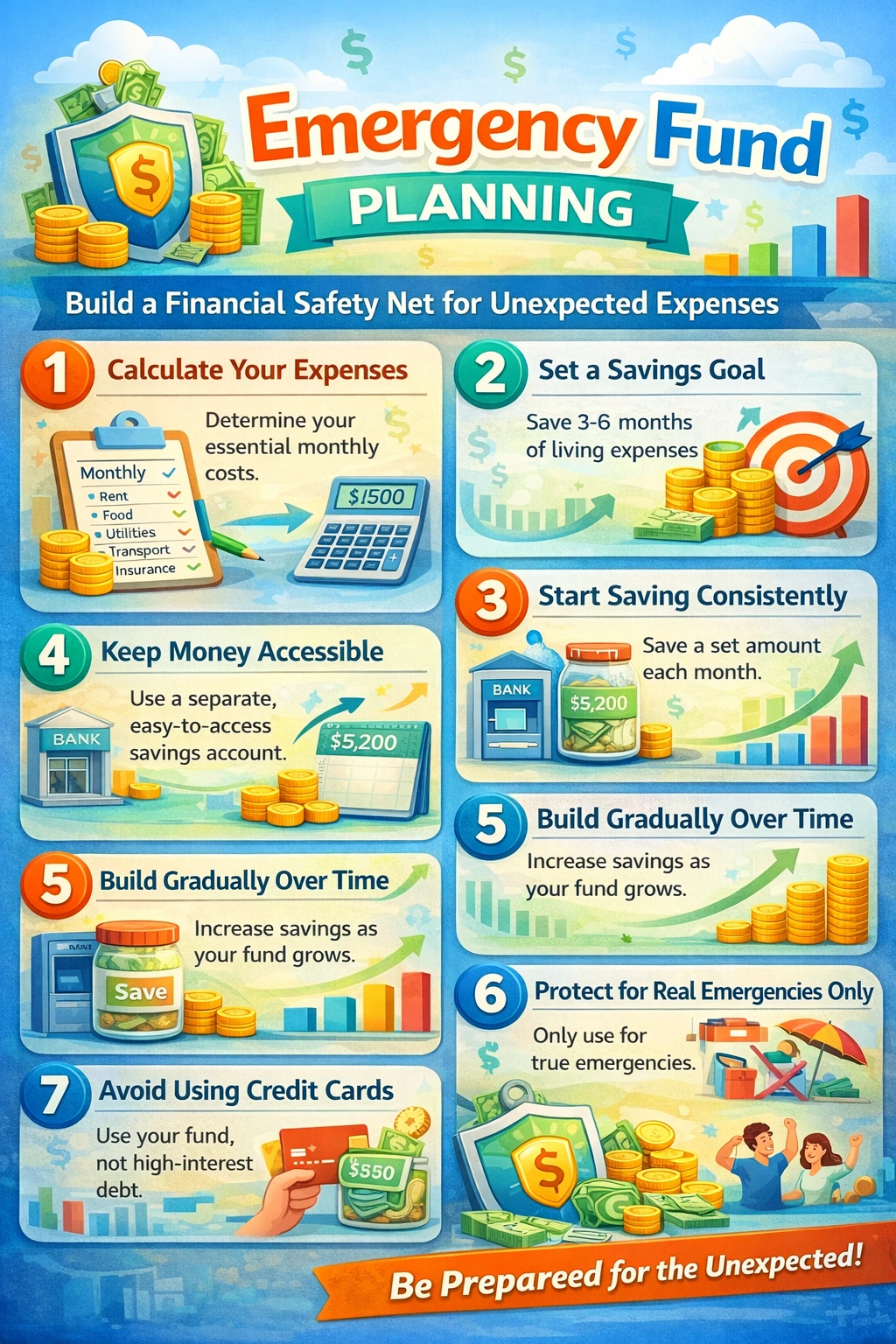
Step 1: Calculate Your Monthly Expenses
First, determine your essential living costs.
Typical expenses include:
- Rent or mortgage
- Food
- Utilities
- Transportation
- Insurance
- Medical costs
Example:
| Expense | Monthly Cost |
|---|---|
| Rent | $700 |
| Food | $300 |
| Transport | $150 |
| Utilities | $120 |
| Insurance | $100 |
Total = $1,370
Step 2: Set a Realistic Savings Goal
Instead of saving the full amount immediately, create small milestones.
Example:
| Goal Stage | Target |
|---|---|
| First Goal | $500 |
| Second Goal | $1,000 |
| Third Goal | 3 months expenses |
Small milestones help maintain motivation.
Step 3: Create a Monthly Savings Plan
Determine how much you can save each month.
Example:
| Monthly Saving | Time to Reach $1,000 |
|---|---|
| $50 | 20 months |
| $100 | 10 months |
| $200 | 5 months |
Even small contributions make progress.
Step 4: Automate Your Savings
Automating transfers makes saving easier and consistent.
Example system:
Income → Automatic transfer → Emergency fund account
This prevents accidental spending.
Step 5: Protect the Emergency Fund
Your emergency fund should only be used for real emergencies.
Avoid using it for:
- Shopping
- Entertainment
- Vacations
Emergency Fund Savings Chart Example
Consistent saving can quickly build financial protection.
| Monthly Saving | 6 Months | 12 Months |
|---|---|---|
| $100 | $600 | $1,200 |
| $200 | $1,200 | $2,400 |
| $400 | $2,400 | $4,800 |
Over time, these savings grow into strong financial security.
Real-Life Example of Emergency Fund Success
Consider the story of Alex.
Alex earns $2,500 monthly and initially had no emergency savings.
After creating a plan:
| Strategy | Result |
|---|---|
| Reduced entertainment spending | Saved $120 |
| Cooked meals at home | Saved $150 |
| Side freelance work | Earned $200 |
Monthly emergency savings = $470
After one year, Alex saved:
$5,640
When a sudden car repair costing $900 occurred, Alex paid it without debt.
Where to Keep Your Emergency Fund
Your emergency savings should be safe and easily accessible.
Good options include:
High-Yield Savings Account
Offers interest while keeping funds accessible.
Separate Savings Account
Helps prevent accidental spending.
Money Market Account
Offers flexibility and modest interest.
Avoid placing emergency funds in risky investments such as stocks.
Common Emergency Fund Mistakes
Many people struggle to maintain emergency savings because of simple mistakes.
Using the Fund for Non-Emergencies
This weakens the purpose of the fund.
Saving Too Slowly Without a Plan
Random saving often leads to slow progress.
Keeping Funds in Cash at Home
Cash may be lost, stolen, or damaged.
Ignoring Small Contributions
Even small amounts add up over time.
Benefits and Effects of Having an Emergency Fund
An emergency fund creates powerful financial advantages.
Financial Effects
- Protection against unexpected expenses
- Reduced reliance on credit cards
- Increased financial stability
Emotional Effects
- Lower financial stress
- Greater confidence in handling challenges
- Improved financial discipline
Over time, emergency savings help create strong financial foundations.
Tips to Build Your Emergency Fund Faster
You can accelerate your savings with these strategies.
Reduce Unnecessary Spending
Cut expenses that do not add value.
Increase Income Sources
Consider side income such as:
- Freelancing
- Online services
- Small business activities
Save Windfalls
Use bonuses, gifts, or tax refunds to boost savings.
Track Progress Regularly
Monitoring progress keeps motivation strong.
Frequently Asked Questions
1. What is the purpose of an emergency fund?
An emergency fund helps cover unexpected expenses without borrowing money or disrupting financial stability.
2. How much should I save for emergencies?
Financial experts recommend saving three to six months of living expenses.
3. Can I start with a small emergency fund?
Yes. Even saving $500 or $1,000 provides protection against small emergencies.
4. Where should I keep my emergency savings?
A separate savings account or high-yield savings account is ideal.
5. Should I invest my emergency fund?
No. Emergency funds should remain safe and easily accessible.
6. How long does it take to build an emergency fund?
The time depends on your savings rate and financial situation.
7. What qualifies as an emergency?
Unexpected events such as medical bills, job loss, or urgent repairs.
8. Should I use my emergency fund to pay debt?
Only if the debt situation becomes a financial emergency.
9. What happens after reaching my emergency fund goal?
You can focus on investing or achieving other financial goals.
10. Can families also use emergency funds?
Yes. Emergency funds are even more important for families with dependents.
Final Thoughts
Emergency fund planning is one of the smartest financial decisions you can make. It protects your finances, reduces stress, and prepares you for life’s unexpected challenges.
Building an emergency fund does not happen overnight. However, with consistent saving habits and a clear plan, anyone can build strong financial protection over time.
Start small, remain disciplined, and gradually increase your savings. Over time, your emergency fund will provide the security and confidence needed to face financial uncertainties.
Once your emergency fund is ready, the next smart move is learning
Smart Debt Management.